

Common Patio Layout Mistakes in Waterford
Most homeowners think a patio is just slabs and furniture. Something flat, something pretty. But the real pros know better — and if you don't, you're setting yourself up for headaches. Patios aren't just about looks. They're about drainage, sun exposure, traffic flow, and whether you'll actually use the space or let it collect moss. Especially in Waterford, CT, where New England weather doesn't play nice and terrain rarely cooperates.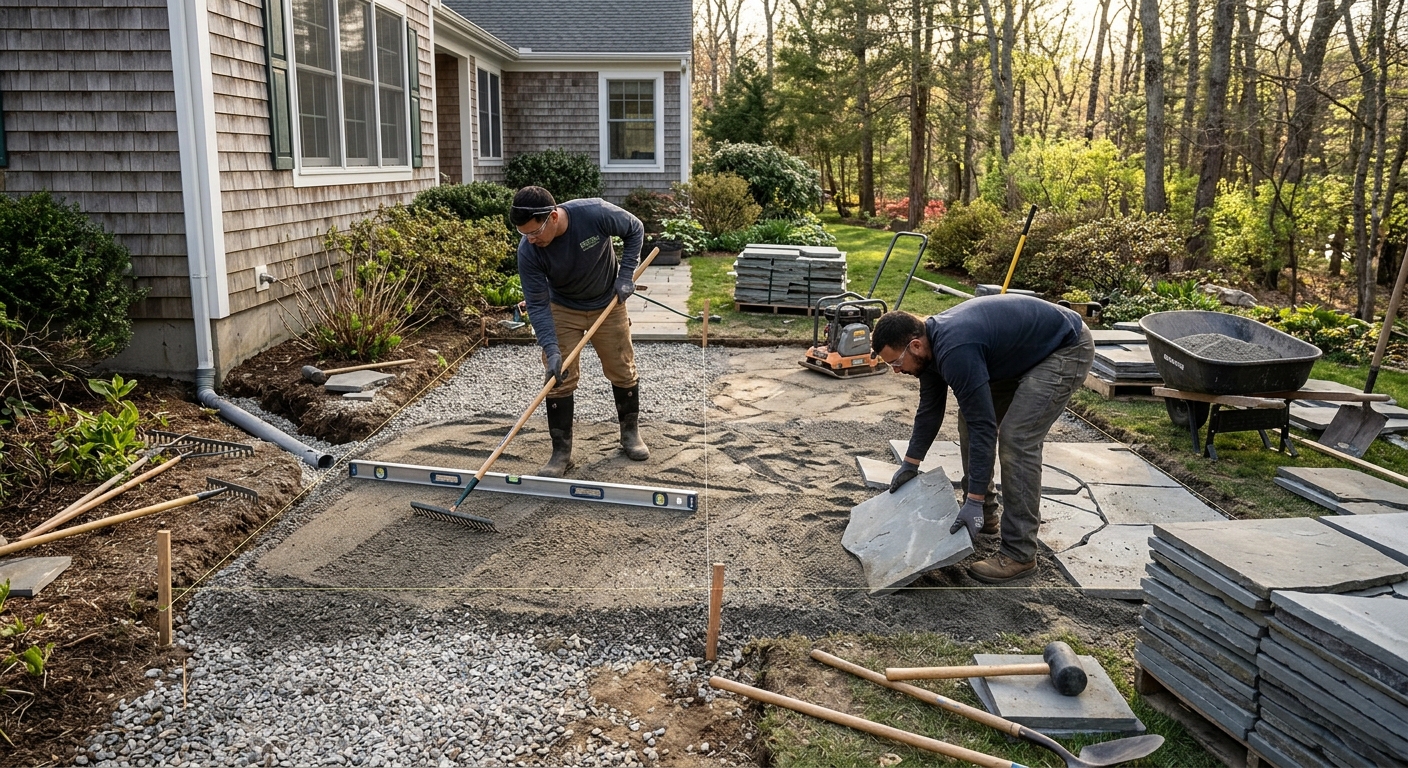
Most homeowners think a patio is just slabs and furniture. Something flat, something pretty. But the real pros know better — and if you don't, you're setting yourself up for headaches. Patios aren't just about looks. They're about drainage, sun exposure, traffic flow, and whether you'll actually use the space or let it collect moss. Especially in Waterford, CT, where New England weather doesn't play nice and terrain rarely cooperates.
So here's what matters. If you're building something you plan to enjoy for years, don't wing it. Every layout decision should account for how water moves, where shadows fall, and whether your chairs will fit without feeling like a game of Tetris. Skip the guesswork. Plan with intent. And every choice should be grounded in how you'll actually live on that patio — not just how it photographs.
Ignoring Slope and Drainage
Nine times out ten, water problems start with layout. You pour a beautiful patio, host your first barbecue, then watch puddles form after the next rain. Waterford gets plenty of wet weather — from spring storms to winter snowmelt — and if your patio doesn't shed water properly, you're asking for trouble. The surface needs a gentle grade — usually about an inch per eight feet — sloping away from the house.
But slope alone won't save you if there's nowhere for the water to go. You need a plan for runoff. Some patios benefit from French drains or gravel trenches along the edges. Others need permeable pavers that let water seep through. And if your yard naturally pools in certain spots? Work around it or reroute it. Ignoring light grading and drainage because it's invisible is how you end up with a swamp instead of a sitting area.
Placing It Where the Sun Never Shines
Location isn't just about convenience. It's about whether your patio will be usable or just decorative. Too many Waterford homeowners tuck their patios into shaded corners or north-facing slots where the sun barely reaches. Then they wonder why the space feels damp, cold, and uninviting even on decent days.
Track the sun before you commit. Walk your yard at different times and note where light hits hardest and longest. A south or west-facing patio usually captures the most warmth, but that can also mean too much exposure in summer. Plan for shade options like pergolas, sails, or plantings. The goal is flexibility — sun when you want it, cover when you need it. Locking yourself into one extreme kills the space.
Underestimating How Much Room You Actually Need
It's tempting to keep the patio small and tidy. Less cost, less maintenance. But cramped outdoor spaces don't get used. You need room to pull chairs out, walk around the table, and not feel like you're playing musical chairs every time someone wants to grab a drink. And if you're adding a grill, fire pit, or planters? That square footage disappears fast.
Before you lay a single paver, map it out. Use stakes and string, or even chalk on the ground. Set up your furniture and walk the layout. If it feels tight now, it'll feel worse once everything's permanent. Better to build a little bigger than to regret every summer that your patio design and installation is too small to actually enjoy.
Choosing Materials That Can't Handle Connecticut Weather
Not every stone or paver is built for New England conditions. Some materials get slippery when wet. Others crack under freeze-thaw cycles. And plenty look gorgeous in the store but turn into maintenance nightmares once they're outside for a season. You need surfaces that can take rain, snow, ice, and temperature swings without falling apart or becoming hazards.
Here's what works in Waterford, CT:
- Porcelain pavers with textured finishes for grip and durability
- Natural stone like bluestone or granite that weathers well and resists freeze-thaw damage
- Concrete pavers with non-slip coatings, especially for high-traffic zones
- Permeable options like gravel-set pavers that handle drainage and reduce runoff
- Avoid polished surfaces or ultra-smooth finishes that turn into ice rinks when wet or frozen
Forgetting About Foot Traffic and Flow
Your patio isn't an island. It needs clear paths in and out — from the house, from the garden, maybe from a side gate. But a lot of layouts ignore flow entirely. You end up with a beautiful space that's awkward to reach, or furniture blocking the only logical entry point.
Think about how people will move. Where's the door? Where's the grill? Where do guests naturally walk? Your layout should guide traffic without forcing people to squeeze past tables or step over planters. If the flow feels clunky on paper, it'll be worse in real life. Keep pathways wide and direct, and don't let decorative elements turn into obstacles.
Skipping Privacy and Wind Protection
Connecticut can get breezy, especially in spring and fall. And unless you're on a secluded lot, your patio probably has sightlines to neighbors or the street. A layout that ignores privacy and shelter is a layout that won't get used. You'll sit out there once, feel exposed or windblown, and then retreat indoors.
Fix it with smart barriers:
- Fencing or trellises along exposed sides for privacy without blocking light
- Hedges or tall grasses that soften views and muffle sound
- Pergolas or slatted screens that break wind while keeping the space open
- Strategic planting in large pots to create natural walls where permanent structures aren't feasible
- Outdoor curtains or roll-down shades for flexible coverage
Building Without a Lighting Plan
Most people think about lighting last. Or not at all. Then the patio's useless after sunset. You can't see the steps, you can't read a menu, and any ambiance you were hoping for is nonexistent. Lighting isn't optional if you want a functional outdoor space that works past dinnertime.
Layer your lighting. Use path lights for safety, wall or post fixtures for general illumination, and string lights or lanterns for mood. Solar options work well in Connecticut summers, but hardwired fixtures give you consistent power year-round. And don't forget dimmers or smart controls so you can adjust intensity based on the occasion. A well-lit patio extends your living space. A dark one just collects spiders.
Clashing With the House Instead of Complementing It
Your patio should feel like it belongs. But too many layouts treat the outdoor space like a separate project with its own aesthetic. You end up with modern pavers against a traditional Colonial home, or rustic timber decking clashing with vinyl siding. It's jarring, and it drags down the overall appeal of your property.
Match materials, colors, and style cues to the house. If your home has warm brick, echo that tone in your paving or edging. If you've got contemporary lines, keep the patio clean and minimal. Transitions matter too — the step from indoors to outdoors should feel seamless, not like crossing into a different property. Cohesion makes everything look intentional and finished.
Neglecting Long-Term Maintenance Realities
Some layouts look amazing on installation day and turn into constant work within a year. Tight joints that trap dirt. Materials that stain easily. Plantings that overgrow and swallow pathways. If you don't think about upkeep during the design phase, you'll spend every spring cursing your choices.
Here's what low-maintenance looks like:
- Wider joints filled with polymeric sand that resists weeds and washout
- Sealed stone or concrete that repels stains and moisture
- Durable furniture materials like powder-coated metal or all-weather wicker
- Plant selections that don't require constant pruning or watering
- Edges and borders that contain mulch and prevent creep onto the patio surface
When DIY Turns Into a Disaster
There's nothing wrong with tackling a patio project yourself — if you know what you're doing. But skipping professional input on grading, drainage, or material choice is how you end up tearing everything out two years later. The pros have seen every mistake, every soil type, every weather condition Connecticut can throw at a patio. They know what works.
If your layout involves slopes, heavy foot traffic, or tricky drainage, bring in a landscaper or hardscape contractor. They'll spot problems before they become expensive fixes. And they'll help you build something that lasts, not just something that looks good in the moment. You don't have to hand over the entire project, but a consultation or site assessment can save you thousands in the long run.
Design Smart, Build Once
Getting a paver patio layout right the first time isn't about luck. It's about thinking through how the space will function, not just how it will look. Connecticut weather demands smart drainage ideas, freeze-resistant materials, and layouts that actually accommodate furniture and foot traffic. Ignore those fundamentals, and you're stuck with a pretty problem that costs more to fix than it did to build.
We've watched too many homeowners rush the planning phase, only to spend the next decade working around a flawed layout. The best patios aren't accidents. They're deliberate, well-documented decisions that account for sun, water, wind, and real-world use. That's the difference between functional outdoor space you avoid and outdoor space you live in.
Ready to Transform Your Patio?
Let's make sure your patio is a space you'll love for years, not a source of regret. We know what works in Waterford, CT and how to avoid the mistakes that trip up so many homeowners. If you're ready to get it right the first time, give us a call at 860-574-0238 or get a free estimate and let's start planning your perfect outdoor retreat together.
So here's what matters. If you're building something you plan to enjoy for years, don't wing it. Every layout decision should account for how water moves, where shadows fall, and whether your chairs will fit without feeling like a game of Tetris. Skip the guesswork. Plan with intent. And every choice should be grounded in how you'll actually live on that patio — not just how it photographs.
Ignoring Slope and Drainage
Nine times out ten, water problems start with layout. You pour a beautiful patio, host your first barbecue, then watch puddles form after the next rain. Waterford gets plenty of wet weather — from spring storms to winter snowmelt — and if your patio doesn't shed water properly, you're asking for trouble. The surface needs a gentle grade — usually about an inch per eight feet — sloping away from the house.
But slope alone won't save you if there's nowhere for the water to go. You need a plan for runoff. Some patios benefit from French drains or gravel trenches along the edges. Others need permeable pavers that let water seep through. And if your yard naturally pools in certain spots? Work around it or reroute it. Ignoring light grading and drainage because it's invisible is how you end up with a swamp instead of a sitting area.
Placing It Where the Sun Never Shines
Location isn't just about convenience. It's about whether your patio will be usable or just decorative. Too many Waterford homeowners tuck their patios into shaded corners or north-facing slots where the sun barely reaches. Then they wonder why the space feels damp, cold, and uninviting even on decent days.
Track the sun before you commit. Walk your yard at different times and note where light hits hardest and longest. A south or west-facing patio usually captures the most warmth, but that can also mean too much exposure in summer. Plan for shade options like pergolas, sails, or plantings. The goal is flexibility — sun when you want it, cover when you need it. Locking yourself into one extreme kills the space.
Underestimating How Much Room You Actually Need
It's tempting to keep the patio small and tidy. Less cost, less maintenance. But cramped outdoor spaces don't get used. You need room to pull chairs out, walk around the table, and not feel like you're playing musical chairs every time someone wants to grab a drink. And if you're adding a grill, fire pit, or planters? That square footage disappears fast.
Before you lay a single paver, map it out. Use stakes and string, or even chalk on the ground. Set up your furniture and walk the layout. If it feels tight now, it'll feel worse once everything's permanent. Better to build a little bigger than to regret every summer that your patio design and installation is too small to actually enjoy.
Choosing Materials That Can't Handle Connecticut Weather
Not every stone or paver is built for New England conditions. Some materials get slippery when wet. Others crack under freeze-thaw cycles. And plenty look gorgeous in the store but turn into maintenance nightmares once they're outside for a season. You need surfaces that can take rain, snow, ice, and temperature swings without falling apart or becoming hazards.
Here's what works in Waterford, CT:
- Porcelain pavers with textured finishes for grip and durability
- Natural stone like bluestone or granite that weathers well and resists freeze-thaw damage
- Concrete pavers with non-slip coatings, especially for high-traffic zones
- Permeable options like gravel-set pavers that handle drainage and reduce runoff
- Avoid polished surfaces or ultra-smooth finishes that turn into ice rinks when wet or frozen
Forgetting About Foot Traffic and Flow
Your patio isn't an island. It needs clear paths in and out — from the house, from the garden, maybe from a side gate. But a lot of layouts ignore flow entirely. You end up with a beautiful space that's awkward to reach, or furniture blocking the only logical entry point.
Think about how people will move. Where's the door? Where's the grill? Where do guests naturally walk? Your layout should guide traffic without forcing people to squeeze past tables or step over planters. If the flow feels clunky on paper, it'll be worse in real life. Keep pathways wide and direct, and don't let decorative elements turn into obstacles.
Skipping Privacy and Wind Protection
Connecticut can get breezy, especially in spring and fall. And unless you're on a secluded lot, your patio probably has sightlines to neighbors or the street. A layout that ignores privacy and shelter is a layout that won't get used. You'll sit out there once, feel exposed or windblown, and then retreat indoors.
Fix it with smart barriers:
- Fencing or trellises along exposed sides for privacy without blocking light
- Hedges or tall grasses that soften views and muffle sound
- Pergolas or slatted screens that break wind while keeping the space open
- Strategic planting in large pots to create natural walls where permanent structures aren't feasible
- Outdoor curtains or roll-down shades for flexible coverage
Building Without a Lighting Plan
Most people think about lighting last. Or not at all. Then the patio's useless after sunset. You can't see the steps, you can't read a menu, and any ambiance you were hoping for is nonexistent. Lighting isn't optional if you want a functional outdoor space that works past dinnertime.
Layer your lighting. Use path lights for safety, wall or post fixtures for general illumination, and string lights or lanterns for mood. Solar options work well in Connecticut summers, but hardwired fixtures give you consistent power year-round. And don't forget dimmers or smart controls so you can adjust intensity based on the occasion. A well-lit patio extends your living space. A dark one just collects spiders.
Clashing With the House Instead of Complementing It
Your patio should feel like it belongs. But too many layouts treat the outdoor space like a separate project with its own aesthetic. You end up with modern pavers against a traditional Colonial home, or rustic timber decking clashing with vinyl siding. It's jarring, and it drags down the overall appeal of your property.
Match materials, colors, and style cues to the house. If your home has warm brick, echo that tone in your paving or edging. If you've got contemporary lines, keep the patio clean and minimal. Transitions matter too — the step from indoors to outdoors should feel seamless, not like crossing into a different property. Cohesion makes everything look intentional and finished.
Neglecting Long-Term Maintenance Realities
Some layouts look amazing on installation day and turn into constant work within a year. Tight joints that trap dirt. Materials that stain easily. Plantings that overgrow and swallow pathways. If you don't think about upkeep during the design phase, you'll spend every spring cursing your choices.
Here's what low-maintenance looks like:
- Wider joints filled with polymeric sand that resists weeds and washout
- Sealed stone or concrete that repels stains and moisture
- Durable furniture materials like powder-coated metal or all-weather wicker
- Plant selections that don't require constant pruning or watering
- Edges and borders that contain mulch and prevent creep onto the patio surface
When DIY Turns Into a Disaster
There's nothing wrong with tackling a patio project yourself — if you know what you're doing. But skipping professional input on grading, drainage, or material choice is how you end up tearing everything out two years later. The pros have seen every mistake, every soil type, every weather condition Connecticut can throw at a patio. They know what works.
If your layout involves slopes, heavy foot traffic, or tricky drainage, bring in a landscaper or hardscape contractor. They'll spot problems before they become expensive fixes. And they'll help you build something that lasts, not just something that looks good in the moment. You don't have to hand over the entire project, but a consultation or site assessment can save you thousands in the long run.
Design Smart, Build Once
Getting a paver patio layout right the first time isn't about luck. It's about thinking through how the space will function, not just how it will look. Connecticut weather demands smart drainage ideas, freeze-resistant materials, and layouts that actually accommodate furniture and foot traffic. Ignore those fundamentals, and you're stuck with a pretty problem that costs more to fix than it did to build.
We've watched too many homeowners rush the planning phase, only to spend the next decade working around a flawed layout. The best patios aren't accidents. They're deliberate, well-documented decisions that account for sun, water, wind, and real-world use. That's the difference between functional outdoor space you avoid and outdoor space you live in.
Ready to Transform Your Patio?
Let's make sure your patio is a space you'll love for years, not a source of regret. We know what works in Waterford, CT and how to avoid the mistakes that trip up so many homeowners. If you're ready to get it right the first time, give us a call at 860-574-0238 or get a free estimate and let's start planning your perfect outdoor retreat together.
‹ Back
Recent Posts
-
How Tree Roots Damage Hardscapes in Waterford
October 13, 2026
-

Safer Winter Walkway Ideas in Waterford
September 29, 2026
-
Popular Stamped Concrete Designs in Waterford
September 15, 2026
-
Can Retaining Walls in Waterford Prevent Yard Erosion?
September 1, 2026
-
Common Patio Layout Mistakes in Waterford
August 18, 2026