How Tree Roots Damage Hardscapes in Waterford
Most property owners think hardscapes are permanent. Pour the concrete, lay the pavers, and you're done. But trees don't see it that way — and if you're not paying attention, you're in for expensive surprises. Roots don't respect borders. They grow where the moisture is, where the soil is loose, and where your driveway happens to be sitting. Waterford's mature canopy and seasonal rain make this even worse.
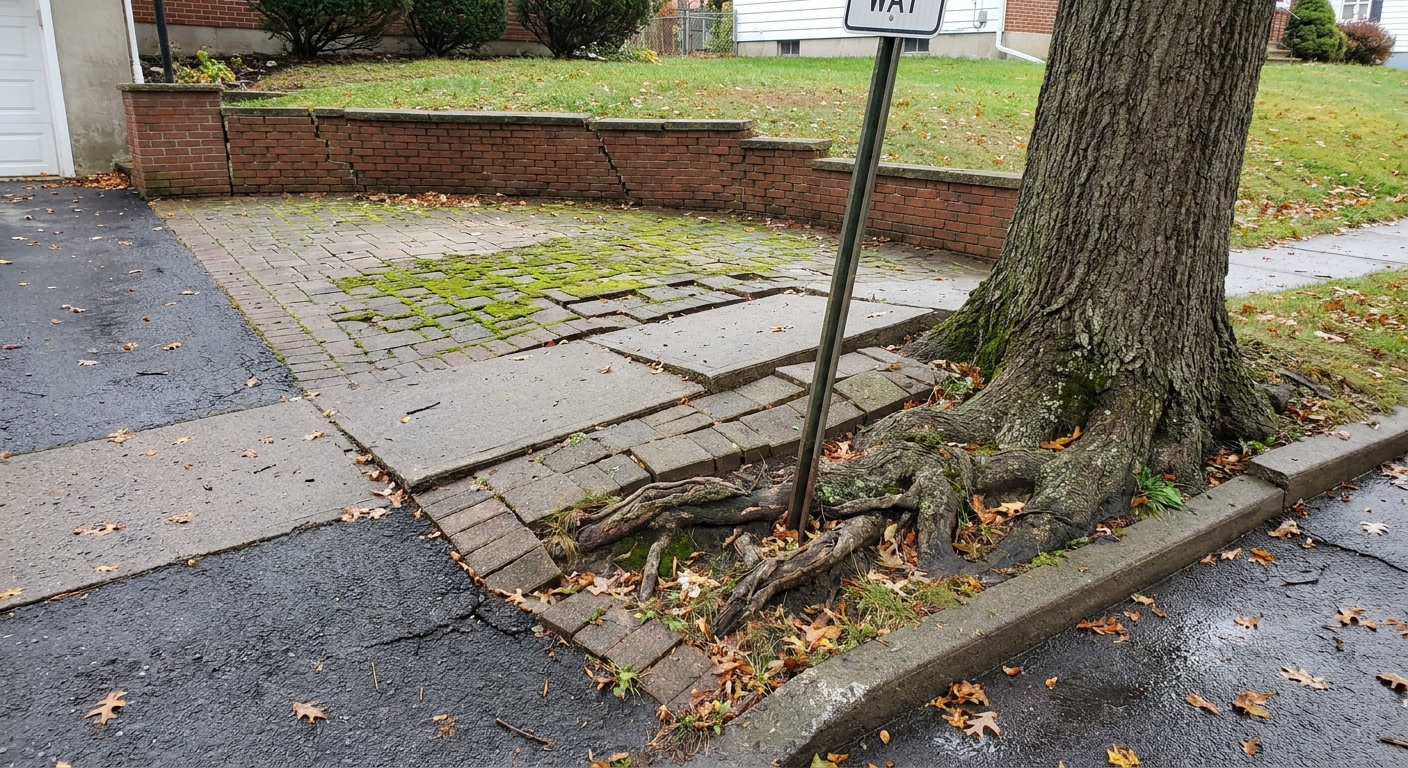
So here's what matters. If you've got established trees near patios, walkways, or retaining walls, those roots are already testing the boundaries. Every crack is an invitation. Every low spot where water pools is a target. And every year you ignore the signs, the repair bill climbs.
Roots Follow the Path of Least Resistance
Tree roots aren't trying to destroy your property. They're looking for water, oxygen, and room to grow. In Waterford, where rain comes heavy and soil stays damp through spring and fall, roots spread wide and shallow. Most of that growth happens in the top foot and a half of soil — right where your hardscapes sit.
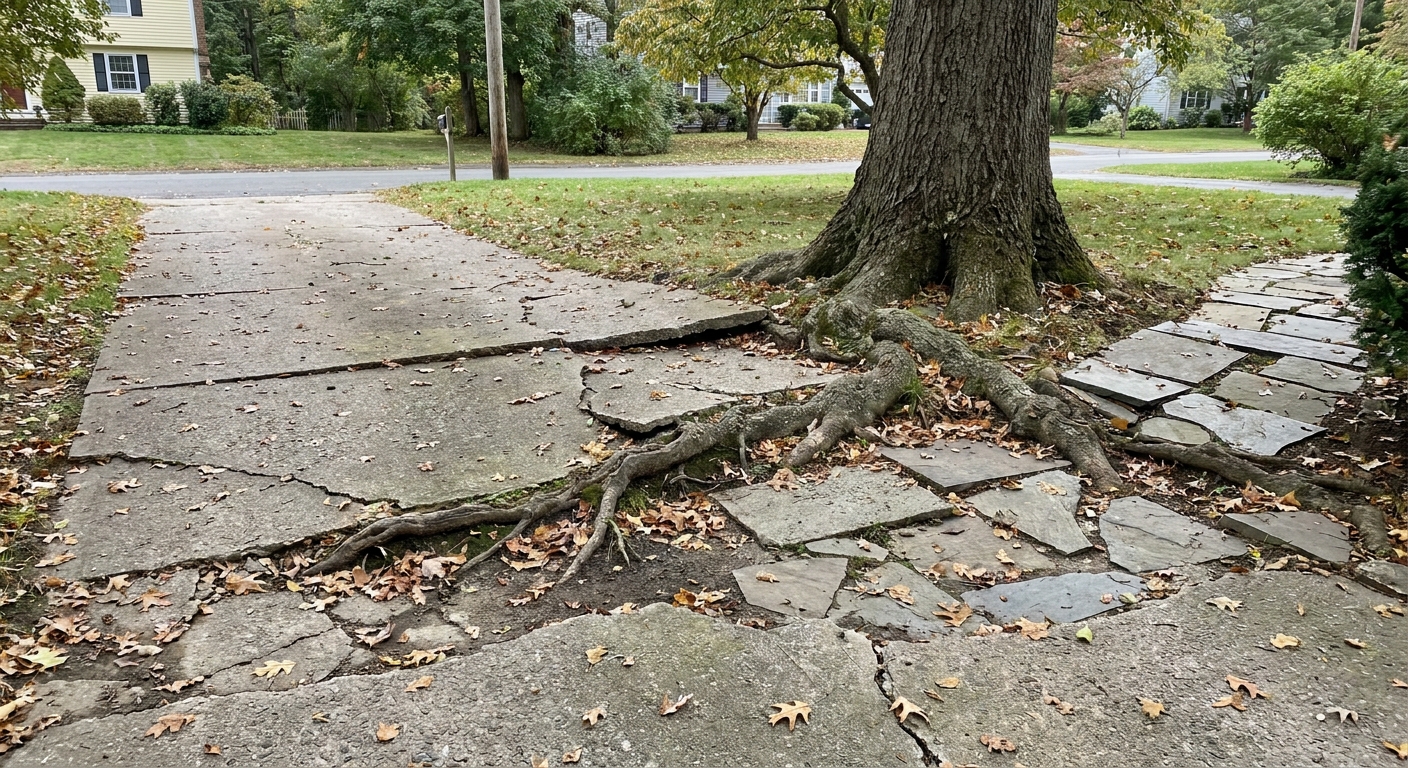
When roots hit concrete or stone, they don't stop. They probe for weaknesses. A hairline crack becomes a corridor. A poorly compacted base becomes a growth zone. Over time, that pressure builds. What started as invisible movement beneath the surface becomes a buckled walkway or a driveway that looks like a relief map.
What Gets Hit First
Walkways take the brunt of it. Thin slabs with minimal base prep are easy targets. You'll see lifting along the edges, uneven sections that catch your foot, and cracks that widen every season. Driveways aren't immune either. Roots work their way under asphalt and concrete, creating voids that collapse under weight.
Patios get compromised when roots infiltrate from the perimeter. Pavers shift, joints separate, and what was once level becomes a tripping hazard. Retaining walls face a different problem — pressure from behind. As roots expand, they push against the base and backfill, bowing the wall outward or cracking the blocks. Once water gets in, freeze-thaw cycles finish the job.
- Walkways develop cracks and uneven sections that worsen with each season
- Driveways experience voids beneath the surface that lead to collapse
- Patios lose their level as pavers shift and joints separate
- Retaining walls bow or crack under root pressure from behind
- Steps and landings tilt as roots disrupt the base layer
Waterford's Climate Speeds Things Up
Waterford isn't just dealing with roots. It's dealing with roots in an environment that feeds them year-round. Heavy spring rains saturate the soil, encouraging aggressive lateral growth. Summer droughts send roots deeper, searching for stable moisture — often directly under hardscapes where runoff collects.
The soil here doesn't help. Sandy loam drains fast, but it also shifts easily when roots push through. Heavier clay holds moisture longer, which keeps roots active in targeted areas. Either way, roots exploit the weak points in your installations. And when winter hits, any water that's seeped into cracks freezes, expands, and cracks things wider.
Why Old Trees Are the Biggest Threat
Mature trees are beautiful. They're also powerful. A tree that's been in place for twenty or thirty years has a root system that extends well beyond its canopy — sometimes two or three times the spread. If your hardscapes were installed after the tree was already established, the roots were there first. You built on top of them.
Even if the hardscape seemed fine for the first few years, roots keep growing. They thicken. They push. And they don't care that your patio cost five figures. Waterford's older neighborhoods are full of properties where the landscaping predates the hardscaping, and that's where the damage shows up most.
- Root systems often extend two to three times beyond the tree canopy
- Mature trees have decades of growth already in place beneath hardscapes
- Thickening roots exert increasing pressure year after year
- Older installations were often built without root barriers or proper base depth
- Established trees prioritize survival, not your driveway's integrity
Stopping Damage Before It Starts
Prevention isn't glamorous, but it's cheaper than replacement. When you're installing new hardscapes, map out where the trees are and where their roots will grow. Don't assume a young tree is harmless — it won't stay small. Root barriers can redirect growth away from critical areas, but they need to be installed deep enough and maintained.
If you're working with existing hardscapes, inspect them regularly. Look for cracks, lifting edges, or areas that hold water. Catch the problem early, and you might be able to reinforce the base or trim back encroaching roots without tearing everything out. Wait too long, and you're looking at full removal and reinstallation.
- Install root barriers at least 24 inches deep when planting near hardscapes
- Choose flexible paving systems that can tolerate minor root movement
- Use permeable materials to reduce moisture buildup that attracts roots
- Inspect hardscapes annually for early signs of lifting or cracking
- Reinforce bases with compacted gravel to limit root penetration
When DIY Won't Cut It
If you're seeing serious damage — shifted pavers, cracked concrete, or a retaining wall that's starting to lean — it's time to bring in professionals. Arborists can assess the root system without killing the tree. Hardscape contractors can evaluate whether repairs are viable or if you're looking at a full replacement.
Sometimes the only solution is removing the tree. That's a last resort, but if the roots are threatening your foundation or creating safety hazards, it's the right call. Just make sure the decision is based on facts, not assumptions. A certified arborist can tell you whether selective pruning or root management will buy you years, or whether the tree's a lost cause.
- Certified arborists can assess root systems without harming the tree
- Hardscape contractors determine whether repairs are feasible or replacement is necessary
- Selective root pruning can extend the life of both the tree and the hardscape
- Tree removal becomes necessary when roots threaten foundations or safety
- Professional guidance prevents costly mistakes and wasted repairs
Documentation Saves You Later
If you're dealing with damage that might involve insurance or warranty claims, document everything. Take photos of the cracks, the lifted pavers, and the visible roots. Get a report from an arborist that identifies the species and the extent of the root system. Keep receipts for any repairs or inspections.
This isn't just about getting reimbursed. It's about proving that the damage wasn't caused by neglect or poor installation. If you ever sell the property, having a record of how you managed the issue shows buyers you didn't ignore problems — you addressed them.
- Photograph all visible damage from multiple angles
- Obtain written assessments from certified arborists
- Save all receipts for inspections, repairs, and materials
- Document the timeline of when damage first appeared and how it progressed
- Keep correspondence with contractors and insurance providers
Trees and Hardscapes Don't Have to Be Enemies
Waterford's landscape is worth protecting, but so is your property. The goal isn't to eliminate trees — it's to plan smarter and act faster when problems show up. Roots will always grow. Hardscapes will always be in the way. The difference between manageable maintenance and total replacement is how early you catch the conflict and how seriously you take it. If you're facing root damage near driveways, entryway steps, or need grading and drainage solutions to manage water pooling that attracts roots, we help property owners make decisions that keep both the canopy and the concrete intact for the long haul.
Let’s Protect Your Hardscapes Together
We know how frustrating it is to watch roots undo your investment, but you don’t have to tackle it alone. Let’s work together to find the right solution for your property—whether that means repairs, prevention, or a full redesign. Give us a call at 860-574-0238 or get a free estimate and see how we can help you keep your hardscapes looking their best for years to come.
‹ Back
Recent Posts
-
How Tree Roots Damage Hardscapes in Waterford
October 13, 2026
-
Safer Winter Walkway Ideas in Waterford
September 29, 2026
-
Popular Stamped Concrete Designs in Waterford
September 15, 2026
-
Can Retaining Walls in Waterford Prevent Yard Erosion?
September 1, 2026
-
Common Patio Layout Mistakes in Waterford
August 18, 2026