Can Retaining Walls in Waterford Prevent Yard Erosion?
Most homeowners think erosion is just a cosmetic problem. A little dirt washing away after a storm, maybe some exposed roots. But if you've watched soil disappear down a slope after every heavy rain, you know better. Erosion doesn't just make your yard look rough — it threatens your property's foundation, destabilizes hardscaping, and drains value faster than you'd expect. Retaining walls aren't just decorative borders. They're engineered barriers that stop soil movement cold.
Waterford's terrain doesn't make this easy. Between the rainfall patterns, natural slopes, and soil composition shifts across neighborhoods, you're dealing with constant pressure on your landscape. A retaining wall done right doesn't just hold things in place. It redirects water, creates usable space, and locks down your yard's integrity for the long haul.
Slopes and Storms Don't Play Fair
Waterford properties sit on varied topography, and that means gravity is always working against you. When rain hits sloped ground, water picks up speed and pulls topsoil with it. Over time, that creates channels, exposes root systems, and eats away at the foundation of structures sitting downhill. It's not dramatic at first — just a thin layer here, a washout there. But erosion compounds. What starts as a minor drainage issue becomes a structural liability.
Homeowners often underestimate how much soil they're losing until the damage shows up in their driveway, patio, or basement. By then, the fix isn't cheap. Erosion doesn't wait for you to notice. It's relentless, and without intervention, it only accelerates with every storm cycle.
What Retaining Walls Actually Do
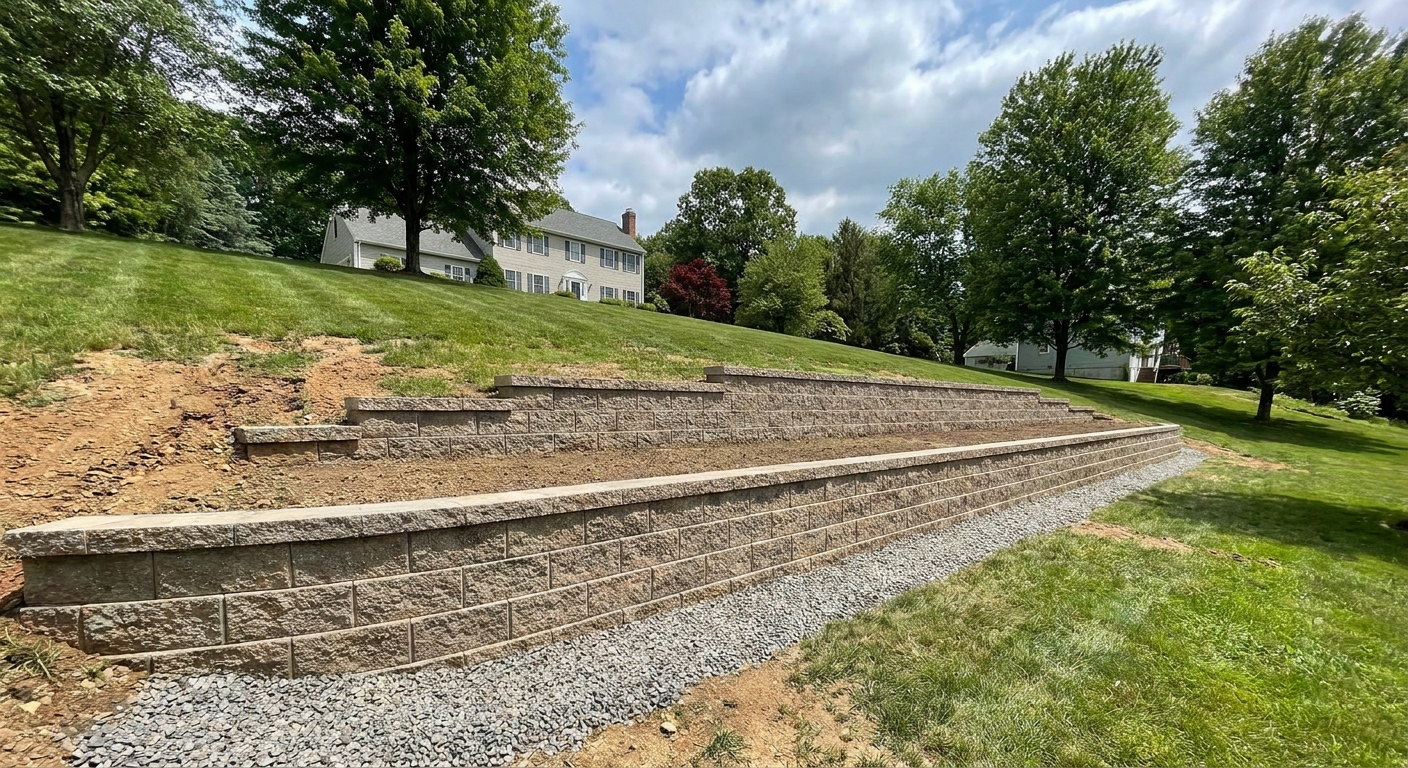
Retaining walls are load-bearing structures built to hold back soil on sloped terrain. They counteract lateral earth pressure — the force of soil trying to slide downhill under its own weight and water saturation. You'll see them built from concrete block, natural stone, treated timber, or brick, depending on height requirements and aesthetic goals. They're not decorative afterthoughts. They're calculated solutions to a physics problem.
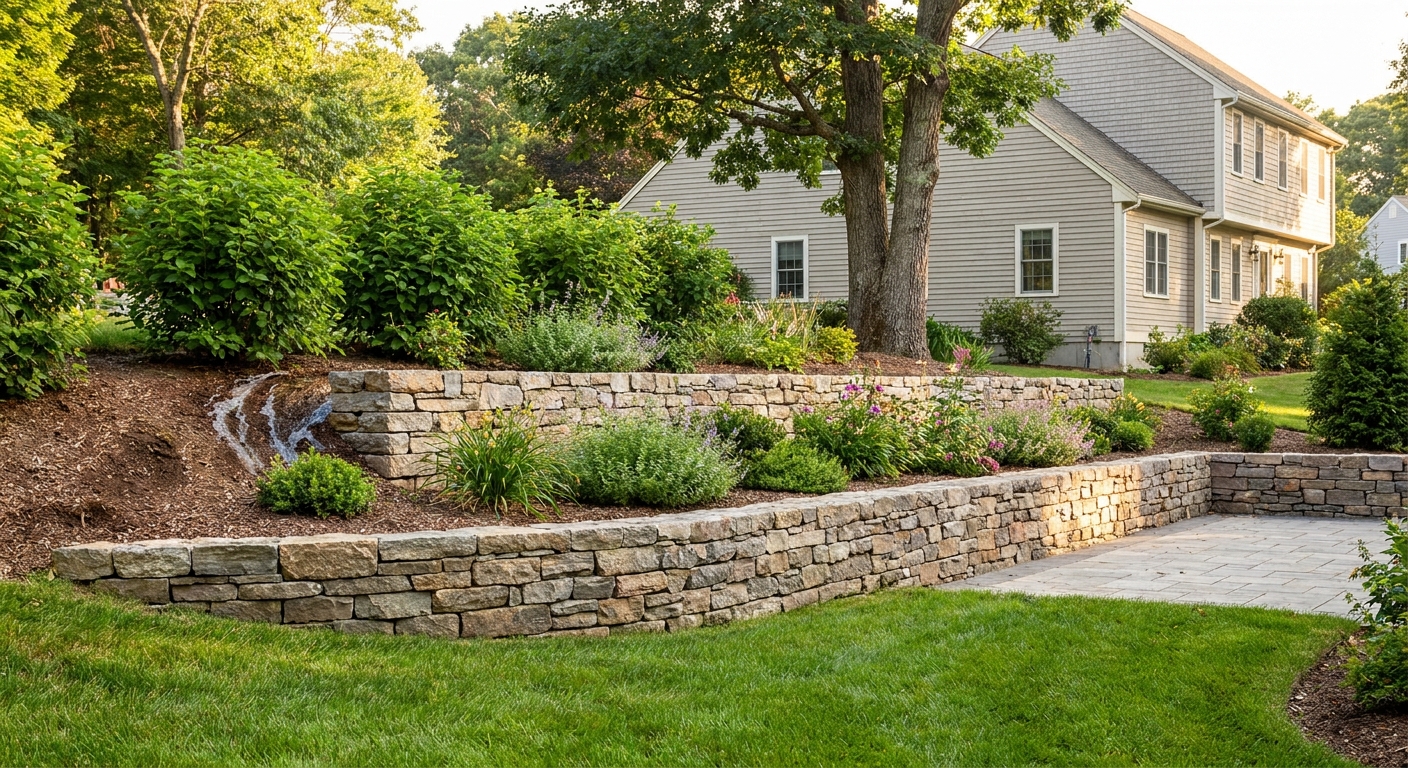
In Waterford, these walls create terraced zones that flatten out slopes and give you usable yard space instead of a mud slide waiting to happen. They can be low garden bed dividers or multi-tiered systems supporting entire hillsides. The design depends on your property's grade, soil type, and how much pressure the wall needs to resist.
How They Stop Soil From Moving
Retaining walls work by creating a rigid vertical plane that soil can't cross. That's the simple version. The smarter version involves drainage, base prep, and backfill strategy. Without proper drainage, water builds up behind the wall and creates hydrostatic pressure — which is exactly what causes walls to crack, bow, or collapse. That's why the best systems include weep holes, gravel backfill, and drainage pipe that channels water away before it saturates the soil mass.
Here's what makes them effective:
- They anchor soil in place and prevent downhill migration during heavy rain
- They manage water flow with built-in drainage that reduces saturation and runoff velocity
- They create flat tiers that slow water movement and give it time to absorb instead of erode
- They support plant growth in controlled beds where root systems reinforce soil stability
- They distribute pressure evenly across the wall face, preventing weak points or blowouts
What You Gain Beyond Erosion Control
Retaining walls solve the erosion problem, but they also unlock value you couldn't access on a sloped lot. A hillside that used to be too steep for anything becomes flat space you can use for gardens, seating areas, or play zones. That's real square footage you're reclaiming. And unlike temporary erosion fixes like mulch or netting, a well-built wall lasts decades with minimal upkeep.
They also protect what you've already invested in. Driveways, foundations, patios — all of it sits safer when the soil beneath and around it isn't shifting. Add in the curb appeal factor, and you're looking at a structure that pays for itself in both function and property value.
Additional Benefits
- Flat, usable zones replace unusable slopes
- Defined structure improves landscape aesthetics and marketability
- Foundations and hardscaping stay intact without soil undermining
- Once installed, walls require little maintenance compared to ongoing erosion repair
- Long-term stability reduces the need for repeated landscaping fixes
Design Decisions That Determine Success
Not every retaining wall is built the same, and the difference between a solid installation and a future failure comes down to planning. Wall height, material choice, drainage setup, and base preparation all factor into whether your wall holds or fails. A four-foot wall on clay soil needs different engineering than a two-foot wall on sandy loam. Miss those details, and you'll be looking at cracks and shifts within a few seasons.
Working with professionals who understand Waterford's soil conditions and local building codes isn't optional if you want results that last. Some walls require permits, especially when they exceed certain heights or sit near property lines. Skipping that step can lead to fines, removal orders, or liability issues down the road.
What to Consider
- Wall height relative to slope angle and soil load
- Material durability and drainage compatibility
- Proper base excavation and compacted backfill layers
- Drainage systems that prevent water buildup behind the wall
- Local permit requirements and setback regulations
Common Mistakes Homeowners Make
Most erosion problems that persist after a retaining wall installation come down to poor drainage or inadequate base prep. Homeowners see the wall go up and assume that's it. But if water has nowhere to go, it builds pressure and pushes the wall out of alignment. Another frequent issue is skipping proper backfill — using native soil instead of gravel means water can't drain, and the wall becomes a dam instead of a retaining structure.
Then there's the DIY angle. Small garden walls under two feet? Sure, many homeowners can handle that. But anything taller or on a steep grade requires engineering. We've seen walls installed without footings, without drainage, and without any regard for load distribution. They look fine for a season, then they lean, crack, or collapse.
Pitfalls to Avoid
- Skipping drainage systems or using inadequate backfill material
- Building without a proper compacted base or footing
- Ignoring local codes or failing to pull required permits
- Using materials not suited for the wall height or soil conditions
- Underestimating the need for professional installation on steep or tall walls
Protecting Your Yard Starts With the Right Structure
Erosion doesn't fix itself. Every storm that passes without a solution means more soil loss, more instability, and more money you'll spend on repairs later. Retaining walls give you control over your landscape, not just this season but for decades. When they're built right, they stop erosion, protect your property, and give you yard space you can actually use.
Waterford homeowners dealing with slopes and runoff don't need to settle for watching their yards wash away. They need systems that work — walls that hold, drain, and last. That's not about hoping for the best. It's about building smart from the start and knowing your property is locked in for good.
Let’s Secure Your Waterford Landscape Together
We know how important it is to keep your yard safe, beautiful, and erosion-free for years to come. If you’re ready to reclaim your outdoor space and protect your investment, let’s talk about the right retaining wall solution for your property. Call us at 860-574-0238 or get a free estimate—we’re here to help you take the next step toward a stronger, more usable yard.
‹ Back
Recent Posts
-
Popular Stamped Concrete Designs in Waterford
September 15, 2026
-
Can Retaining Walls in Waterford Prevent Yard Erosion?
September 1, 2026
-
Common Patio Layout Mistakes in Waterford
August 18, 2026
-
Is Your Driveway in Waterford Draining the Wrong Way?
August 4, 2026
-