When Is It Time to Replace Your Patio in Central Connecticut?
Most homeowners think patios are permanent. Pour it, lay it, forget it. But the weather in Central Connecticut sees things differently—and if you're ignoring the signs, you're setting yourself up for bigger problems. Patios take a beating from freeze-thaw cycles, drainage shifts, and root pressure. And when the damage starts showing, it rarely stops on its own.
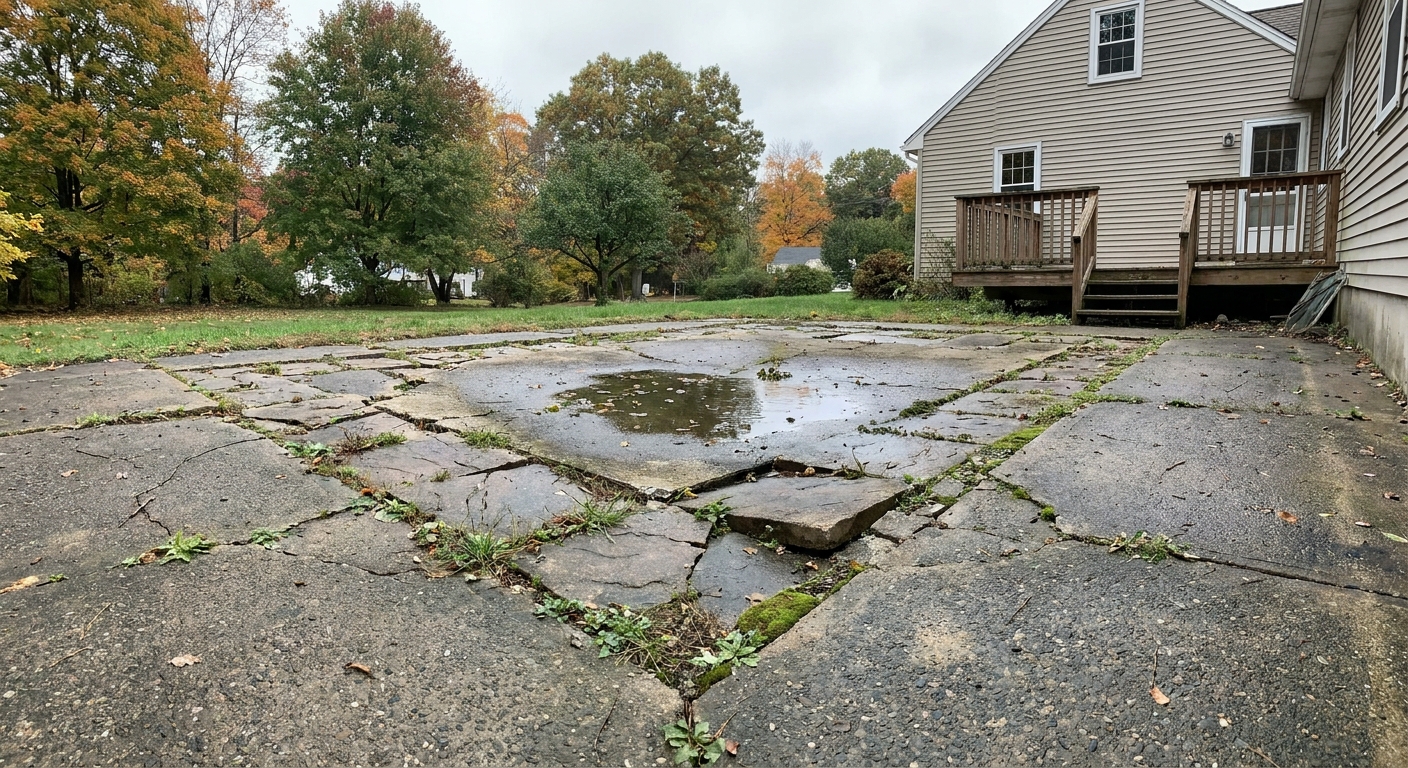
So here's what matters. If your outdoor space is cracking, sinking, or turning into a safety hazard, that's not cosmetic—it's structural. Every season adds stress. Every ignored symptom compounds the issue. And every decision to replace should be grounded in how the patio performs now, not how it looked when it was new.
Cracks That Keep Coming Back
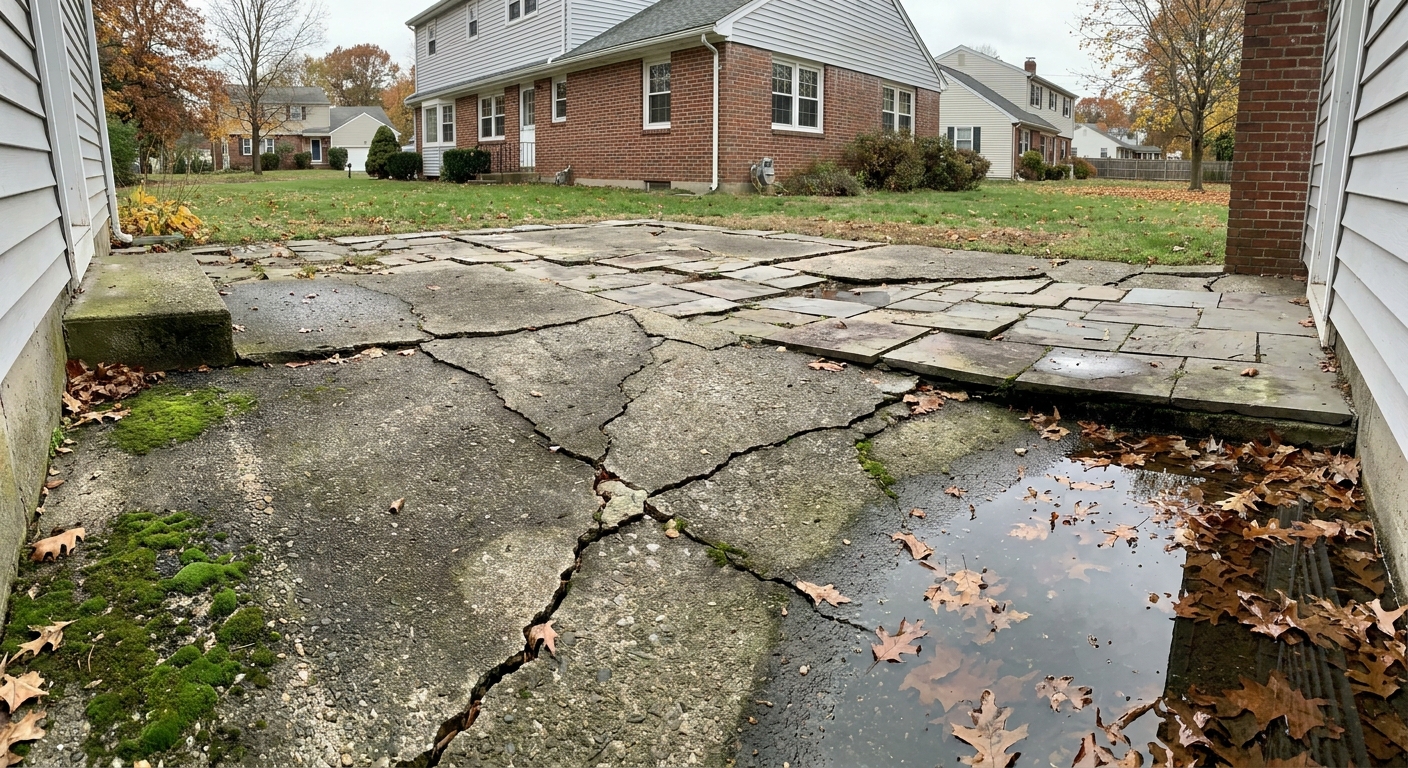
Hairline cracks happen. That's normal wear. But when those lines spread, deepen, or start creating lips where sections don't meet anymore, you've crossed into replacement territory. Central Connecticut winters are ruthless—water seeps in, freezes, expands, and breaks apart whatever's in its way. Concrete and stone don't bounce back from that kind of abuse.
If you're patching the same spots year after year, you're not fixing the problem. You're delaying it. And the longer you wait, the more the base layer shifts underneath. Once the foundation goes, surface repairs are just expensive Band-Aids.
Water Doesn't Lie
Pooling water is one of the clearest signals that your patio's done. It means the slope's off, the base has settled unevenly, or the drainage system has failed. In this region, that standing water doesn't just sit there—it freezes, thaws, breeds mold, and slowly works its way toward your home's foundation.
We see this all the time with older patios that weren't built with modern grading standards. The surface might look fine at first glance, but after a heavy rain, you've got ponds forming where there should be runoff. That's not something you can fix with a power washer.
Pavers That Won't Stay Put
Loose pavers are annoying. Missing pavers are dangerous. If you're constantly resetting stones or watching gaps widen between units, the problem isn't the pavers themselves—it's what's underneath. Sand bases compact over time, especially when tree roots or poor drainage destabilize the ground.
You can replace individual stones, sure. But when it's a pattern across the whole patio, you're looking at a system failure. The base needs to be rebuilt, the edges need to be re-secured, and the surface needs to be releveled. At that point, replacement makes more sense than piecemeal fixes.
The Green Invasion
Weeds popping up between pavers aren't just ugly—they're evidence. They mean the jointing sand has washed out, the base is exposed, and moisture is getting where it shouldn't. In shaded or damp areas, moss and mildew take over fast, turning your patio into a slick hazard.
Once vegetation takes hold, it accelerates the breakdown. Roots push stones apart, organic matter traps water, and the freeze-thaw cycle does the rest. You can pull weeds and spray all you want, but if the structure's compromised, they'll keep coming back.
What Replacement Actually Fixes
A new patio isn't just about looks. It's about solving the problems the old one couldn't handle anymore. Here's what a proper replacement delivers:
- Elimination of tripping hazards caused by uneven surfaces or sunken sections
- Improved water management with updated grading and drainage solutions
- Stronger foundation materials that handle freeze-thaw cycles without cracking
- Modern designs that match your current lifestyle and home aesthetic
- Long-term durability that reduces maintenance costs and headaches
When DIY Isn't Enough
Homeowners love to tinker. Reseal here, patch there, maybe throw down some fresh sand. But patio replacement isn't a weekend project, and mistakes cost more than just time. If you're dealing with drainage issues, structural shifts, or widespread damage, you need someone who understands local soil conditions and climate patterns.
A good contractor will assess not just what's visible, but what's happening below the surface. They'll check the base layer, test drainage, and identify root pressure or frost heave issues. That kind of insight prevents you from rebuilding the same problems into a new patio.
Design That Works for How You Live
Replacing a patio gives you a chance to rethink the space entirely. Maybe the old layout was too small, too shaded, or oriented wrong for entertaining. Maybe you need integrated seating, better lighting, or a fire pit area. Modern materials offer options that didn't exist when your current patio went in.
Function matters as much as form. A well-designed patio accounts for sun exposure, privacy, access to the house, and how you actually use the space. If the old setup never quite worked, now's the time to fix that—not just rebuild what was there before.
What Good Documentation Looks Like
Before you commit to replacement, get everything in writing. You'll want more than a handshake and a rough estimate. Here's what your project documentation should include:
- Detailed site assessment noting current drainage, soil conditions, and damage
- Material specifications with warranties and expected lifespan
- Timeline with milestones for excavation, base prep, and final installation
- Cost breakdown separating labor, materials, and any additional site work
- Permitting confirmation if required by local building codes
Mistakes That Cost You Twice
Most replacement projects go sideways because of three common errors. First, skipping proper base preparation to save money upfront. That leads to settling and failure within a few seasons. Second, ignoring drainage—if water doesn't move away from the patio and your foundation, you're building on borrowed time. Third, choosing materials based on price alone instead of climate suitability. Not every stone or concrete mix handles Connecticut winters the same way.
Get these wrong, and you'll be replacing your replacement sooner than you think. It's not just frustrating—it's expensive. Do it right the first time, and the patio will outlast your mortgage.
Climate Realities You Can't Ignore
Central Connecticut isn't kind to outdoor surfaces. The freeze-thaw cycle here is relentless. Water gets into small cracks, freezes overnight, expands, and splits the material apart. By spring, what was a hairline crack in fall has turned into a chasm. Concrete and natural stone both suffer, but the damage shows up differently depending on installation quality and material choice.
Add in heavy rain, root growth from mature trees, and the occasional nor'easter, and you've got a perfect storm for patio deterioration. Replacement means building with these conditions in mind—better base materials, proper compaction, effective drainage, and surface treatments that resist moisture penetration.
When Professionals Add Real Value
A qualified contractor doesn't just show up with a truck and some tools. They bring knowledge of local soil types, water table behavior, and code requirements. They know which base materials compact best in Connecticut clay, how to grade for maximum runoff, and which sealers hold up through multiple winters.
Here's what working with a pro actually gets you:
- Accurate assessment of whether repair or replacement makes financial sense
- Design input that maximizes usability and aesthetic appeal
- Access to commercial-grade materials not available at retail
- Installation techniques that account for regional climate challenges
- Warranty coverage that protects your investment long-term
Timing Matters More Than You Think
Patio replacement isn't something you schedule in December. Weather dictates when work can happen, and contractors book up fast during prime building months. Spring and fall offer the best conditions—moderate temperatures, lower humidity, and ground that's neither frozen nor waterlogged.
If you're planning ahead, start conversations in late winter. By the time the ground thaws, you'll have estimates, material selections finalized, and a spot on the schedule. Wait until summer, and you might be looking at delays that push the project into fall or even the following spring.
Boosting Value Beyond the Surface
A new patio isn't just about fixing what's broken. It's one of the few home improvements that delivers measurable return on investment. Buyers see outdoor living space as premium square footage, especially when it's well-designed and properly maintained. A crumbling, unsafe patio does the opposite—it raises red flags and becomes a negotiation point.
Even if you're not selling anytime soon, the quality-of-life improvement is immediate. You'll actually use the space instead of avoiding it. Entertaining becomes easier. Maintenance drops to almost nothing. And you're not constantly worrying about someone tripping or the whole thing collapsing after the next freeze.
Knowing What You're Getting Into
Replacement projects vary widely in scope and cost. A simple concrete slab redo runs differently than a multi-level stone patio with built-in features. Get multiple quotes, but don't just chase the lowest number. Look at what's included—excavation depth, base thickness, edge restraints, compaction method, and warranty terms all matter.
Ask about timeline disruptions too. Will you lose access to your backyard for weeks? Where does excavated material go? How do they protect landscaping and existing structures? These details separate smooth projects from nightmares.
Stop Waiting for It to Get Worse
Patios don't heal themselves. That crack won't shrink. The drainage won't improve. The loose pavers won't magically resettle. Every season that passes adds stress, expands damage, and increases the eventual replacement cost. Waiting doesn't save money—it just transfers the problem to a worse version of itself down the road.
If you're seeing the signs, you already know what needs to happen. The question isn't whether to replace, it's when and with whom. Choose a contractor who understands how different stone types hold up in regional conditions, uses quality materials, and stands behind their work. Professional patio design and installation should account for water pooling issues, climate challenges, and long-term durability. Whether you're addressing drainage solutions for sloped properties or exploring options like stamped concrete for your patio, working with experienced professionals ensures your outdoor space becomes an asset, not a liability. Make it one that actually lasts.
Ready to Transform Your Patio?
We know how important a safe, beautiful outdoor space is for your home and your peace of mind. If your patio is showing its age or just isn’t working for your lifestyle anymore, let’s talk about what’s possible. Give us a call at 860-574-0238 or get a free estimate and together we’ll create a patio that’s built to last and ready for every season in Central Connecticut.
‹ Back
Recent Posts
-
When Is It Time to Replace Your Patio in Central Connecticut?
October 27, 2026
-
How Tree Roots Damage Hardscapes in Waterford
October 13, 2026
-
Safer Winter Walkway Ideas in Waterford
September 29, 2026
-
Popular Stamped Concrete Designs in Waterford
September 15, 2026
-
Can Retaining Walls in Waterford Prevent Yard Erosion?
September 1, 2026