
Fixing Yard Drainage Problems in Central Connecticut Homes
Most homeowners think drainage is just about keeping the lawn dry. Water shows up, water leaves. But your foundation sees more than that — and if you don't, you're asking for structural trouble. Poor drainage may not flood your basement overnight, but it does leave a footprint on your property. Especially if you're ignoring grading issues or letting runoff pool near the house.
So here's the reality. If you're investing in landscaping or home improvements, that's great. Just don't treat water flow like someone else's problem. Every puddle should have a path. Every slope needs purpose. And every drainage decision should be grounded in how the water moves — not just how the yard looks after a sunny week.
Clay Soil Doesn't Play Fair
Central Connecticut sits on some of the most stubborn soil in the region. Clay-heavy ground absorbs water at a crawl, which means rain doesn't soak in — it sits. And when it sits, it finds the lowest point on your property, whether that's a corner of the lawn or right up against your foundation.
Topography makes it worse. If your lot slopes toward the house or sits at the bottom of a hill, you're collecting runoff from everyone uphill. Seasonal storms and snowmelt only amplify the issue. Without proper grading or drainage infrastructure, you're fighting gravity with a garden hose.
What Poor Drainage Actually Looks Like
Some signs are obvious. Others creep up slowly until the damage is done. We've seen properties where the warning signals were ignored for years — and by the time the basement flooded, the fix was ten times more expensive.
Here's what to watch for:
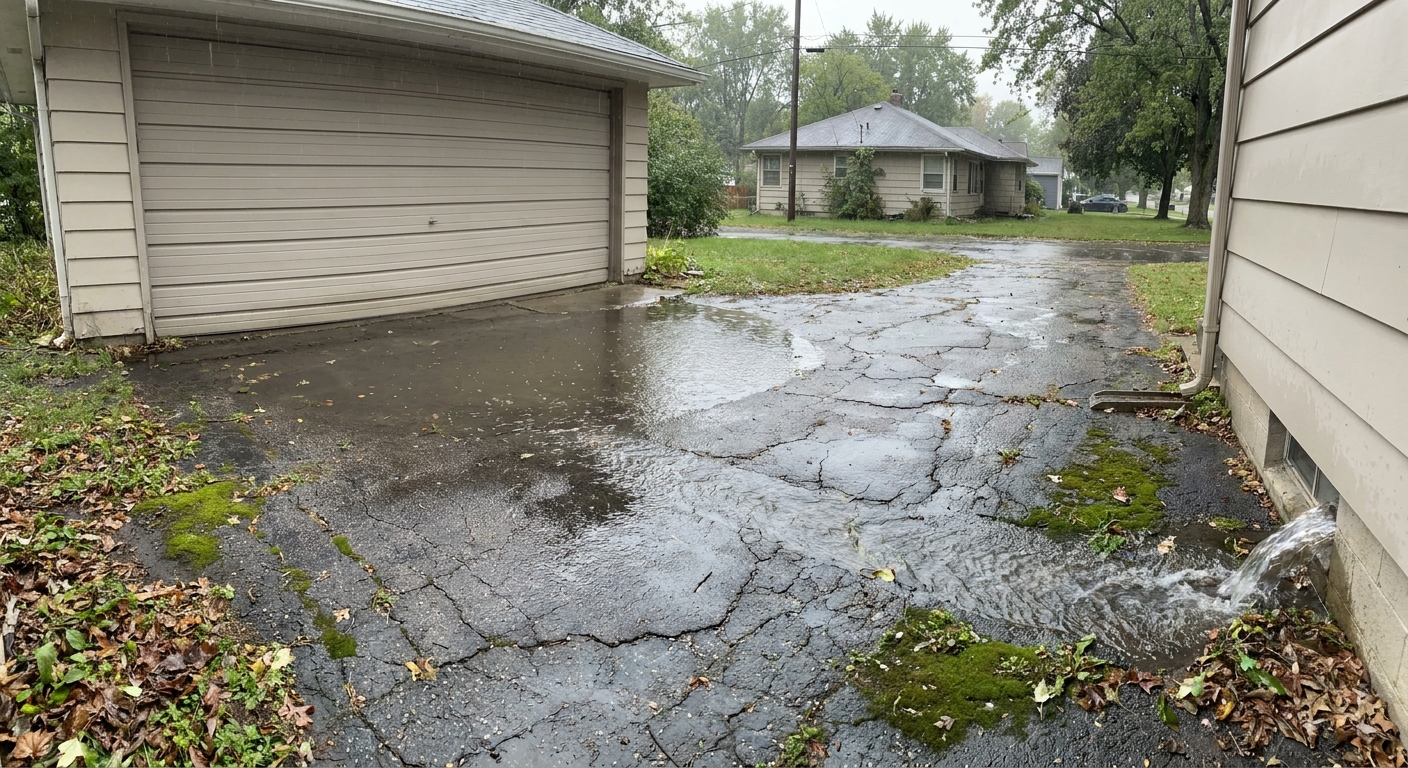
- Puddles that stick around long after the rain stops
- Spongy or muddy patches that never seem to dry out
- Water stains or dampness creeping into your basement
- Foundation cracks that weren't there last season
- Dead grass or plants in low-lying zones
- Moss or algae taking over walkways and patios
Regrading Fixes the Foundation of the Problem
If water flows toward your house instead of away from it, no amount of landscaping will save you. Proper grading is the first line of defense. A professional can reshape the slope so runoff moves toward the street, a storm drain, or a designated collection area.
Even minor adjustments make a difference. We're talking inches, not feet. But those inches determine whether water pools against your foundation or drains harmlessly into the yard. Skip this step, and every other fix is just a band-aid.
French Drains Handle the Heavy Lifting
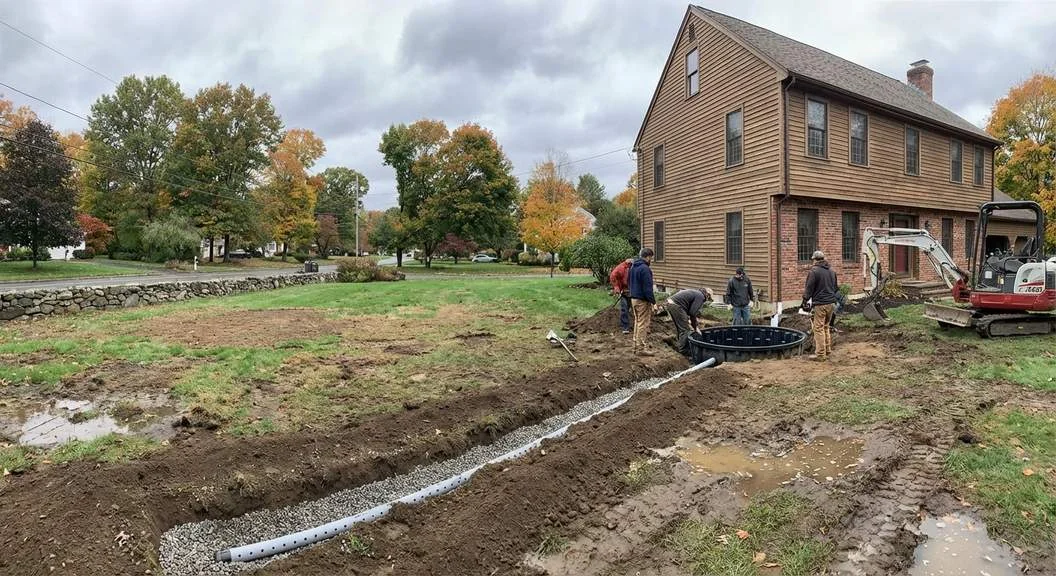
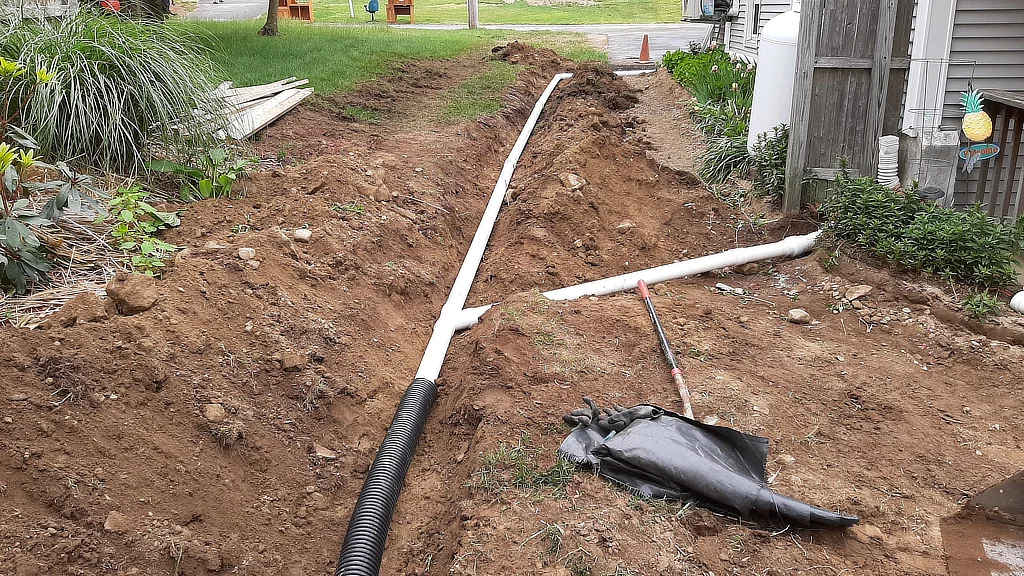
When regrading isn't enough — or when you've got persistent soggy zones — French drains step in. These are trenches filled with gravel and a perforated pipe that redirects water underground. They're effective along foundation perimeters, in low-lying sections, or anywhere water refuses to move on its own.
Installation isn't glamorous, but it works. The pipe collects water and carries it away from problem areas, dumping it somewhere safe. If your yard has multiple trouble spots, you can connect several drains into a single system. Just make sure the outlet point is lower than the intake, or you're building a bathtub.
Dry Wells Absorb What the Soil Won't
A dry well is an underground chamber that collects runoff and lets it percolate slowly into the surrounding soil. Water from downspouts, sump pumps, or French drains can feed into it. This solution works best when you don't have room for surface drainage or when local codes restrict where you can discharge water.
Dry wells aren't a cure-all. If your soil drains poorly to begin with, the well can fill up and overflow. But in the right conditions — and with proper sizing — they're a reliable way to manage excess water without rerouting it across your neighbor's yard.
Downspouts That Dump Too Close Cause Chaos
Your gutters do their job. They collect roof runoff and funnel it into downspouts. But if those downspouts discharge water three feet from your foundation, you're just moving the problem from the roof to the basement.
Extend them. At least six to ten feet away from the house. Use solid pipe or flexible extensions, and make sure the outlet slopes downhill. If you can't extend far enough, tie the downspout into a French drain or dry well. Just don't let it pool where it lands.
Swales and Rain Gardens Add Function and Beauty
Swales are shallow, grassy channels that guide water away from your home and toward a safe drainage area. They're simple, effective, and blend into the landscape. Rain gardens take it a step further — planted with native, water-loving species, they absorb and filter runoff while adding curb appeal.
Both options are environmentally friendly and work well for moderate drainage issues. They won't solve a severe grading problem, but they can handle seasonal overflow and reduce the load on other drainage systems. Plus, they look a lot better than a muddy trench.
Soil Amendments Help Water Move
Compacted or clay-heavy soil can be improved. Aeration breaks up the surface, and adding organic matter — compost, peat, or aged manure — increases the soil's ability to absorb and drain water. This won't fix a major drainage issue on its own, but it reduces surface runoff and helps grass and plants thrive in areas that used to stay soggy.
Here's what soil improvement can do:
- Increase water infiltration rates
- Reduce surface puddling and runoff
- Improve root health and lawn resilience
- Support healthier plant growth in low-lying areas
- Complement other drainage solutions like French drains or swales
When DIY Stops Being Smart
Some drainage fixes are straightforward. Extending a downspout or adding a rain garden? You can handle that. But severe grading issues, persistent basement leaks, or properties with complex topography? That's when you call in a pro.
A local drainage contractor or landscape expert can assess your property, recommend the right solutions, and ensure proper installation. They'll also spot problems you didn't know existed — like underground springs, broken drain tiles, or soil conditions that require specialized equipment.
What a Professional Brings to the Table
Hiring a pro isn't just about avoiding the heavy lifting. It's about getting the diagnosis right and implementing solutions that actually work long-term.
Here's what they handle:
- Accurate grading and slope analysis
- Proper sizing and placement of French drains or dry wells
- Compliance with local codes and permits
- Integration of multiple drainage systems
- Long-term maintenance planning
Common Mistakes That Make Things Worse
We've seen homeowners try to fix drainage on their own and end up creating new problems. The most common mistake? Redirecting water onto a neighbor's property. That's not just rude — it can be illegal. Local ordinances often dictate where you can and can't discharge runoff.
Another frequent error is installing a French drain without a proper outlet. The water has to go somewhere. If it doesn't, the drain fills up and stops working. And don't forget about maintenance. Drains clog. Gutters overflow. Swales fill with debris. If you're not checking these systems regularly, they'll fail when you need them most.
Timing Matters More Than You Think
The best time to fix drainage problems is before they cause damage. Waiting until your basement floods or your foundation cracks means you're paying for repairs on top of the drainage fix. Spring and fall are ideal for installation — the ground is workable, and you can test the system before the next heavy rain or snowmelt.
If you're planning other landscaping projects, coordinate them with drainage work. Regrading, installing drains, and planting rain gardens all involve digging. Do it all at once, and you'll save time, money, and the hassle of tearing up your yard twice.
Protecting What You've Built
Drainage isn't glamorous. It doesn't show up in curb appeal photos or impress guests at a backyard barbecue. But it's the difference between a property that holds its value and one that slowly deteriorates from water damage. Central Connecticut's soil and weather don't give you a pass. Either you manage the water, or it manages you — and it won't be gentle about it. For properties with sloped terrain requiring specialized drainage solutions, professional assessment ensures long-term protection. If you're dealing with persistent drainage issues or need expert guidance, get a free estimate to protect your investment before water damage becomes costly.
Let’s Solve Your Drainage Challenges Together
We know how frustrating it is to watch water threaten your home and landscaping year after year. Let’s put an end to the guesswork and protect your property with solutions that last. If you’re ready to take control of your yard’s drainage, give us a call at 860-574-0238 or get a free estimate and let’s get your project started the right way.
‹ Back
Recent Posts
-
Popular Stamped Concrete Designs in Waterford
September 15, 2026
-
Can Retaining Walls in Waterford Prevent Yard Erosion?
September 1, 2026
-
Common Patio Layout Mistakes in Waterford
August 18, 2026
-
Is Your Driveway in Waterford Draining the Wrong Way?
August 4, 2026
-