Retaining Walls in Central Connecticut for Sloped Yards
Most homeowners look at a sloped yard and see a problem. Grass that's hard to mow. Water that runs where it shouldn't. Soil that slides after every storm. But the real issue isn't the slope itself — it's what happens when you ignore it. Central Connecticut's freeze-thaw cycles, heavy spring rains, and unpredictable weather don't just test your landscape. They reshape it. And if you're not managing that grade with intention, you're watching your property erode in real time.
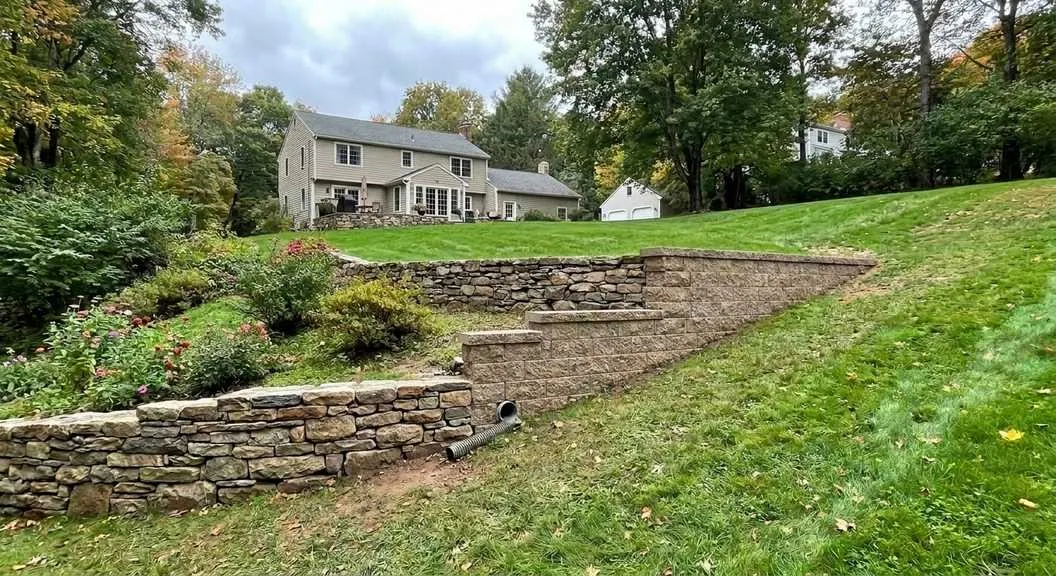
So here's the reality. A retaining wall isn't cosmetic. It's structural. It holds back soil, redirects water, and creates usable space where there wasn't any before. Every yard with a grade needs a strategy. Every wall needs proper drainage. And every decision should be grounded in how the land behaves — not just how it looks from the driveway.
Erosion Doesn't Wait for Permission
Nine times out of ten, sloped yards lose soil faster than homeowners realize. Rain hits the surface, gravity does its thing, and before long you've got exposed roots, uneven terrain, and runoff pooling against your foundation. Connecticut's climate makes this worse. Freeze-thaw cycles crack the ground open. Spring storms dump inches in hours. And once erosion starts, it compounds.
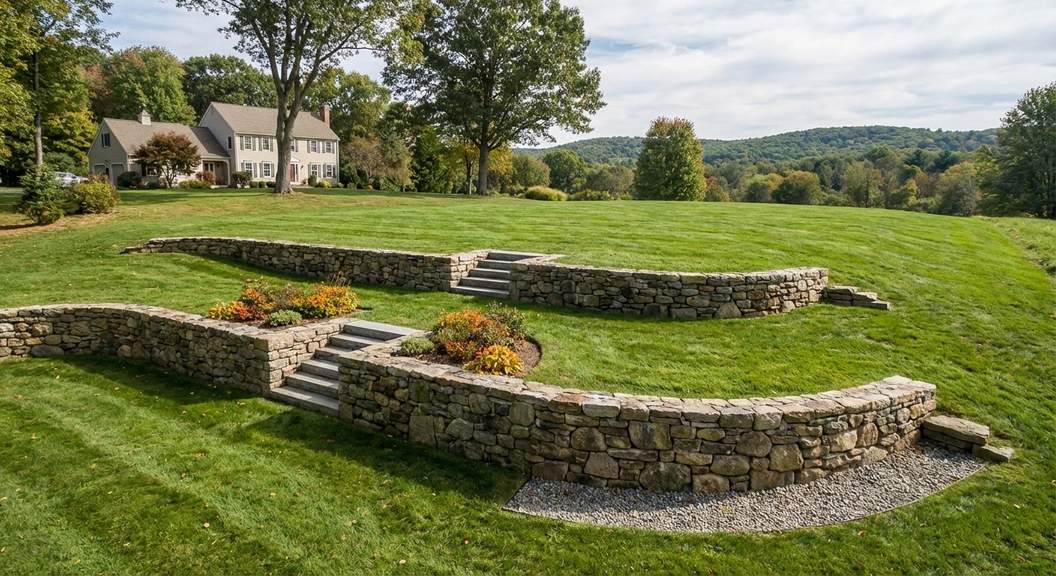
But if you install a retaining wall? Different outcome. The structure holds the soil in place, even during heavy weather. We've seen this play out across Central Connecticut — properties that used to flood every April now shed water cleanly. Yards that were too steep to use now have level terraces for gardens or patios. And when the wall is built right, the erosion stops cold.
The Materials That Actually Hold Up
You can't just stack blocks and call it done — material choice matters. Some options look great but fail under pressure. Others last decades but cost more upfront. The key is matching the material to your site conditions and budget.
Here's what works in Central Connecticut:
- Concrete blocks offer durability and design flexibility, with interlocking systems that handle frost heave better than older methods
- Natural stone blends into New England landscapes and lasts generations, though installation costs run higher
- Timber gives you a rustic look at a lower price point, but expect more maintenance and a shorter lifespan in wet conditions
- Poured concrete delivers maximum strength for taller walls or heavy loads, with a clean modern finish
- Brick provides classic appeal and works well for shorter decorative walls, though it's less common for heavy-duty applications
Drainage Decides Whether Your Wall Survives
Want your retaining wall to last? You'll need to manage the water behind it. Hydrostatic pressure builds up fast when drainage fails, and that pressure cracks even the strongest walls.
The solution has three main components:
- Gravel backfill creates a permeable layer that lets water flow down instead of pushing outward
- Weep holes or drainage pipes give water an exit path at the base of the wall
- Proper grading directs surface runoff away from the wall before it ever becomes a problem
Height Triggers Permits and Engineering
If your wall is staying under four feet, most towns in Central Connecticut won't require a permit. You can design it, build it, and move on. But cross that threshold and the rules change. Taller walls need engineering stamps. Some municipalities want soil reports. And if you're near a property line or wetland, expect additional scrutiny.
You'll need to check with your local building department before you dig. Most small and midsize projects won't hit regulatory limits — but those that do need to plan ahead. Especially if the wall is supporting a driveway, patio, or other load-bearing surface.
Your Investment Only Pays Off With Proper Installation
Want a wall that lasts? Build it right the first time. You'll need more than a weekend and a pile of blocks to make it work.
Here's what proper installation includes:
- Excavation deep enough to get below the frost line and establish a stable base
- Compacted gravel foundation that won't shift or settle over time
- Level courses with proper setback to counteract soil pressure
- Backfill and drainage systems installed as the wall goes up, not as an afterthought
- Cap stones or finishing details that protect the top course from water infiltration
Where Most Homeowners Go Wrong
Trying to DIY a tall wall without understanding soil mechanics? That's how walls fail in year two. Skipping drainage because it's "just a small slope"? The freeze-thaw cycle will prove you wrong. Most homeowners who get it right either hire experienced contractors or follow proven methods — and plenty avoid costly repairs by recognizing when a project is beyond their skill level.
Connecticut Soil Isn't One-Size-Fits-All
Don't assume every yard behaves the same. Central Connecticut has clay-heavy soils in some areas, sandy loam in others, and ledge that stops excavation cold. If you hit bedrock at two feet, your wall design changes. If the soil drains poorly, your backfill strategy shifts. Test your soil before you commit to a plan. It's not glamorous. It prevents failure.
When to Bring In a Professional
If your wall is over four feet, sits on unstable soil, or needs to support a structure, you're in territory where mistakes get expensive. A qualified contractor helps you navigate permits, choose materials that match site conditions, install drainage that actually works, and build a wall that won't need rebuilding in five years.
It's not just about getting the wall up this season. It's about creating a permanent solution that protects your property and adds value for the long haul.
Sloped Yards Need Structure, Not Guesswork
Managing a grade isn't the hard part. Building a wall that holds up through Connecticut winters — and defending that investment when the ground freezes and thaws — that's where properties either thrive or slide backward. There's no shortcut when the engineering matters. But there's also no reason to settle for erosion when the solution is proven and available. We help homeowners turn challenging slopes into functional, beautiful outdoor spaces with walls built to last.
Let’s Build a Wall That Lasts
We know how important it is to protect your property and reclaim usable space on a sloped yard. If you’re ready to stop erosion and add lasting value to your home, let’s talk about the right retaining wall for your landscape. Call us at 860-574-0238 or get a free estimate and see how we can help you transform your yard for good.
‹ Back
Recent Posts
-
Popular Stamped Concrete Designs in Waterford
September 15, 2026
-
Can Retaining Walls in Waterford Prevent Yard Erosion?
September 1, 2026
-
Common Patio Layout Mistakes in Waterford
August 18, 2026
-
Is Your Driveway in Waterford Draining the Wrong Way?
August 4, 2026
-