Concrete Walkways in Eastern Connecticut That Hold Up to Weather
Eastern Connecticut doesn't mess around when it comes to weather. Freeze-thaw cycles hit hard. Ice builds up fast. Summer humidity creeps into everything. And if your walkway wasn't built to handle that, you're looking at cracks, heaving, and a surface that becomes a liability instead of an asset. Most property owners assume concrete is concrete — pour it, smooth it, done. That's not how durability works.
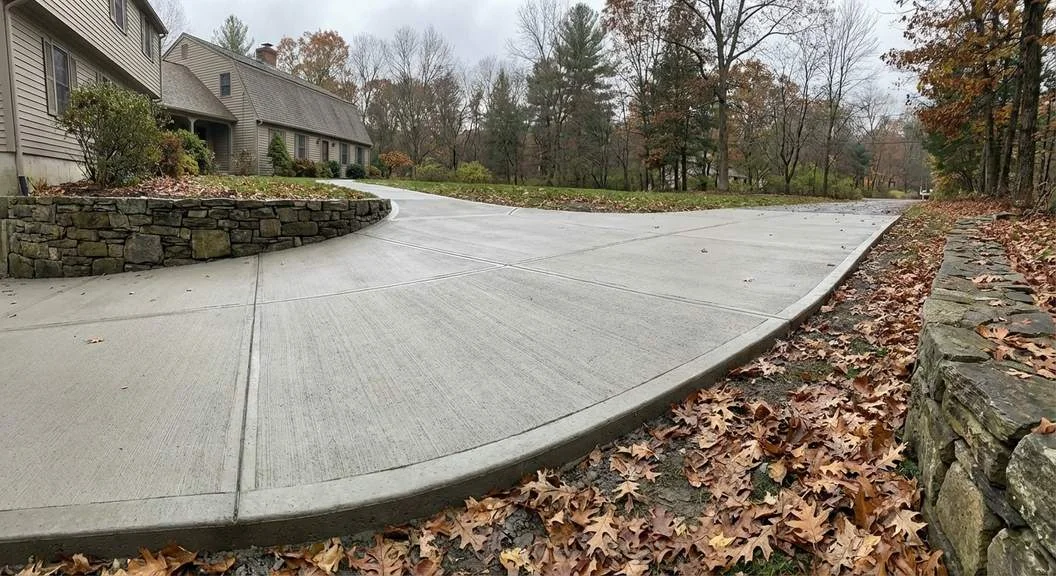
We've seen too many walkways fail within a few seasons because the mix was wrong, the base wasn't prepped, or the contractor skipped steps to save time. A walkway that holds up isn't about luck. It's about understanding what Eastern Connecticut throws at you and building accordingly. Every decision — from aggregate size to joint placement — matters when the ground freezes six inches deep and thaws by noon.
The Real Threat Is Under the Surface
Most people blame the concrete when a walkway cracks. But the problem usually starts below it. Eastern Connecticut soil shifts with moisture and temperature swings. Clay-heavy ground expands when wet and contracts when dry. Freeze-thaw cycles push and pull the base layer, and if that base wasn't compacted right or drained properly, the slab above it doesn't stand a chance.
We always start with a stable, well-draining sub-base — typically crushed stone compacted in layers. That foundation keeps the concrete from settling unevenly or cracking under pressure. Without it, you're building on quicksand. And no amount of rebar or fancy finish will fix a walkway that's sinking into unstable ground.
Air Entrainment Isn't Optional
If your concrete mix doesn't include air-entraining agents, it's already compromised. These additives create microscopic air pockets throughout the slab, giving water somewhere to go when it freezes and expands. Without them, that expansion has nowhere to go but through the concrete itself — and that's how you get spalling, surface flaking, and structural cracks.
We spec mixes with the right air content for freeze-thaw resistance, and we test it on-site. It's not something you eyeball. The difference between 4% and 7% air content can mean the difference between a walkway that lasts twenty years and one that starts breaking down after three winters. Eastern Connecticut weather demands precision, not guesswork.
What Goes Into a Weather-Resistant Pour
Building a walkway that survives here means controlling every variable. The mix has to be right. The base has to be solid. The finishing has to account for drainage and traction. And the curing process has to protect the concrete while it gains strength.
Here's what we prioritize on every job:
- Proper water-to-cement ratio to prevent weak spots and surface scaling
- Steel reinforcement or fiber mesh to control cracking from ground movement
- Control joints cut at regular intervals to manage expansion and contraction
- Slight slope away from structures to keep water moving off the surface
- Curing blankets or compounds to prevent rapid moisture loss during the first week
Sealing Adds Years, Not Just Shine
A sealer isn't cosmetic. It's a barrier between your concrete and everything trying to break it down — water, salt, oil, UV rays. In Eastern Connecticut, where de-icing chemicals get spread heavy and freeze-thaw cycles repeat dozens of times each winter, an unsealed walkway is exposed on all fronts.
We recommend a penetrating sealer that soaks into the concrete and repels moisture from within, rather than just sitting on top. Reapply every two to three years, and you'll keep water out, reduce staining, and slow down wear. Skip it, and you're shortening the lifespan of your walkway by half — maybe more.
Drainage Dictates Longevity
Water is the enemy. It pools, it seeps, it freezes, it expands. If your walkway doesn't shed water quickly, you're inviting damage. We slope every pour at least a quarter inch per foot, and we make sure the surrounding grade directs runoff away from the slab.
Where drainage is tricky, we add channel drains or adjust the landscape to keep water from sitting. It's not glamorous work, but it's the difference between a walkway that weathers the storm and one that buckles under it. Eastern Connecticut gets enough rain and snowmelt that poor drainage isn't a minor issue — it's a structural one.
Finishing Choices That Actually Matter
Smooth trowel finishes look clean, but they're slippery when wet and dangerous when icy. We push clients toward broom finishes or exposed aggregate — both offer traction without sacrificing durability. Stamped or decorative concrete can work too, as long as the installer knows how to maintain structural integrity while adding texture.
Color and pattern are fine, but they're secondary. The finish has to perform first. If it looks great but becomes a slip hazard every time it rains, it's a liability. We balance aesthetics with function, and in this climate, function wins every time.
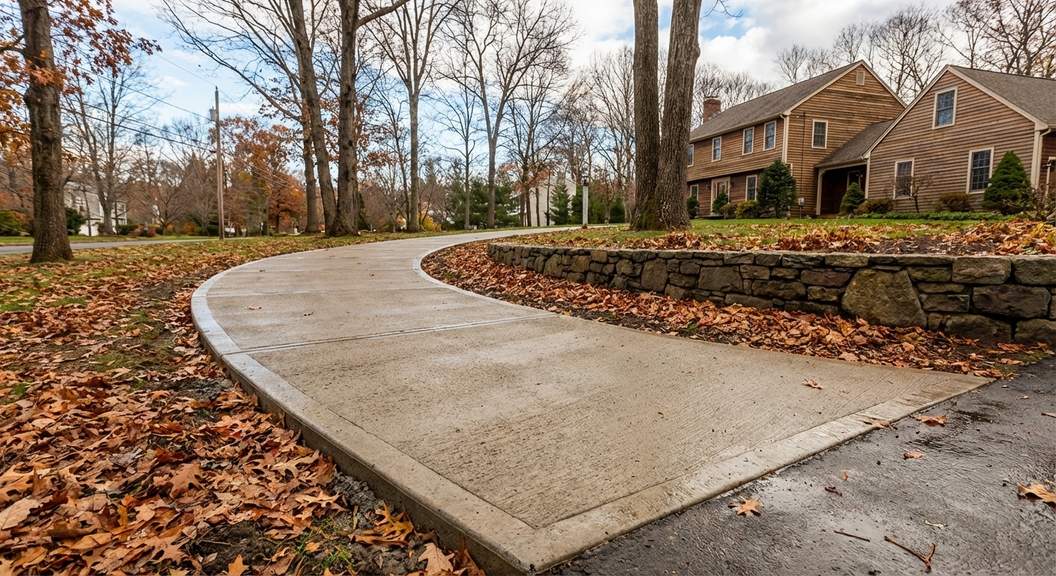
Maintenance Habits That Extend the Life
Even the best-built walkway needs attention. We tell clients to treat their concrete like an investment, not a set-it-and-forget-it feature. A little upkeep goes a long way, especially when the weather's working against you.
Here's what keeps a walkway in top shape:
- Clear debris regularly so moisture doesn't get trapped against the surface
- Use plastic shovels for snow removal to avoid gouging or chipping
- Apply sand or kitty litter for traction instead of rock salt or calcium chloride
- Reseal every few years to maintain water resistance
- Patch small cracks immediately before they spread or let water in
When the Contractor Cuts Corners
We've repaired more walkways than we've built from scratch, and most of the failures trace back to rushed work or cheap materials. Contractors who skip the base prep, use the wrong mix, or don't reinforce properly leave clients with problems that show up fast — and cost more to fix than doing it right the first time.
Ask questions before you hire. What's the mix design? How thick is the base? What kind of reinforcement are they using? If they can't answer or they brush you off, walk away. Eastern Connecticut's climate doesn't forgive shortcuts, and neither should you.
Why Local Experience Counts
A contractor who's built walkways in Arizona or Florida doesn't know what works here. Eastern Connecticut has its own soil conditions, frost depth, and weather patterns. We've spent years learning how concrete behaves in this region, and that knowledge shows up in every pour.
Local experience means understanding when to pour, how to cure in different seasons, and what mix adjustments to make based on the forecast. It means knowing which sealers hold up and which ones fail after one winter. That's not something you pick up from a manual — it's earned through repetition and problem-solving on the ground.
What to Expect from a Quality Install
A professional crew will take time to prep the site, compact the base in layers, and pour in sections with proper joints. They'll finish the surface for traction and drainage, then protect the concrete while it cures. The whole process takes longer than a quick pour-and-go, but that's the point.
Here's what a solid installation includes:
- Site excavation and grading to establish proper slope and drainage
- Compacted stone base at least four inches deep
- Reinforcement placed mid-slab for crack control
- Control joints cut or formed at regular intervals
- Sealer applied after the concrete has fully cured
The Cost of Doing It Right
Quality concrete work isn't cheap, but it's a fraction of what you'll spend fixing a failed walkway. We've seen clients try to save a few hundred dollars upfront, only to pay thousands more in repairs within five years. Eastern Connecticut's weather will expose every shortcut, every weak spot, every corner that got cut.
Budget for the right materials, the right process, and the right crew. You'll get a walkway that holds up, looks good, and doesn't become a maintenance headache. That's not an upsell — it's the baseline for work that lasts.
Walkways Built to Last
Eastern Connecticut demands more from concrete than most regions. The freeze-thaw cycles are relentless. The soil shifts. The weather swings from one extreme to another. But when a walkway is built with the right mix, the right base, and the right finishing techniques, it holds up. We've seen it happen over and over — concrete that weathers decades of punishment because someone took the time to do it right.
There's no magic formula. Just solid planning, quality materials, and a crew that understands what this climate requires. If you're putting in a walkway, don't settle for anything less. The ground beneath your feet should be stable, safe, and built to last — no matter what the weather throws at it. For professional patio and walkway design, proper grading and drainage solutions are essential, and understanding how different materials hold up in New England conditions helps ensure long-term durability. You can explore our completed projects to see quality workmanship in action.
Ready to Upgrade Your Walkway?
We know what it takes to build concrete walkways that stand up to Eastern Connecticut’s toughest weather. If you want a walkway that lasts, let’s talk about your project and how we can make it happen the right way. Give us a call at 860-574-0238 or get a free estimate and let’s get your property set up for years of worry-free use.
‹ Back
Recent Posts
-
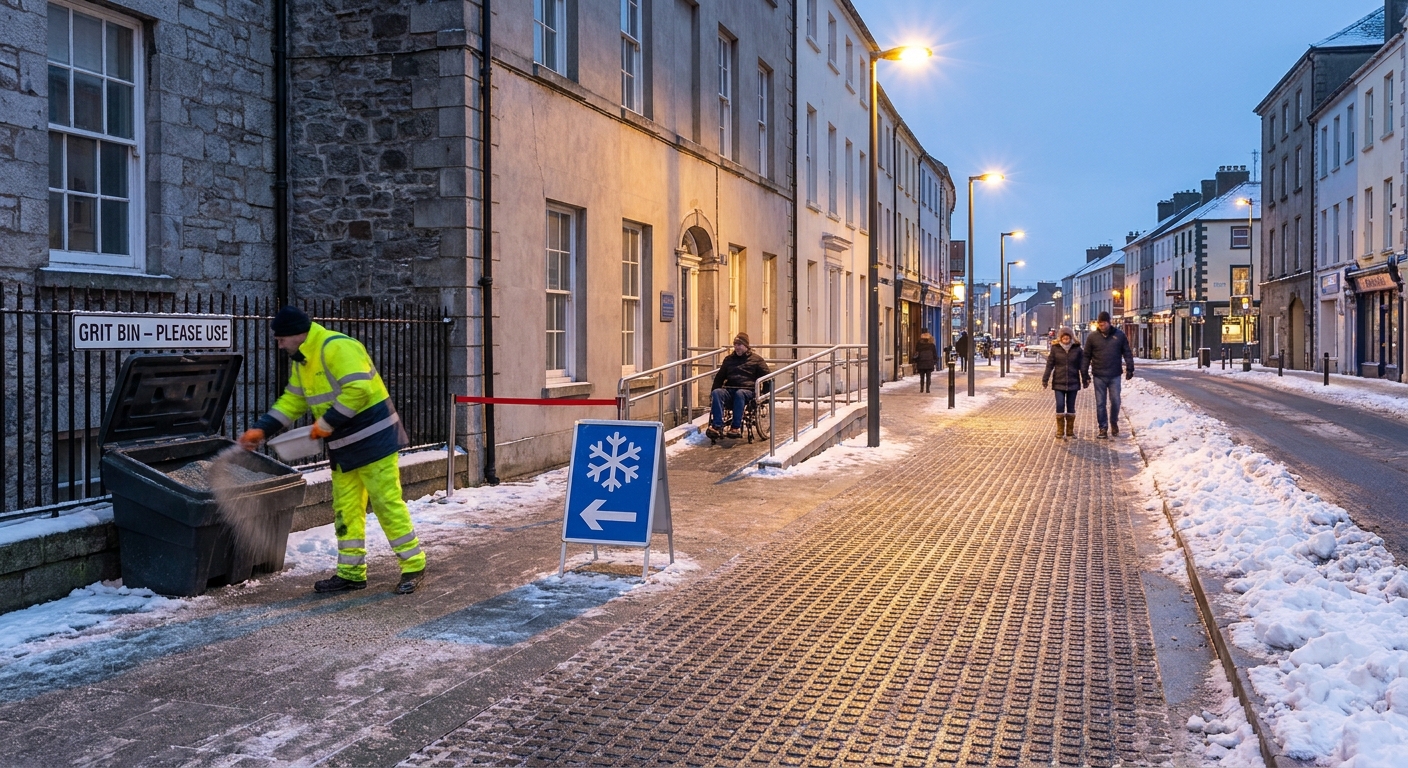
Safer Winter Walkway Ideas in Waterford
September 29, 2026
-
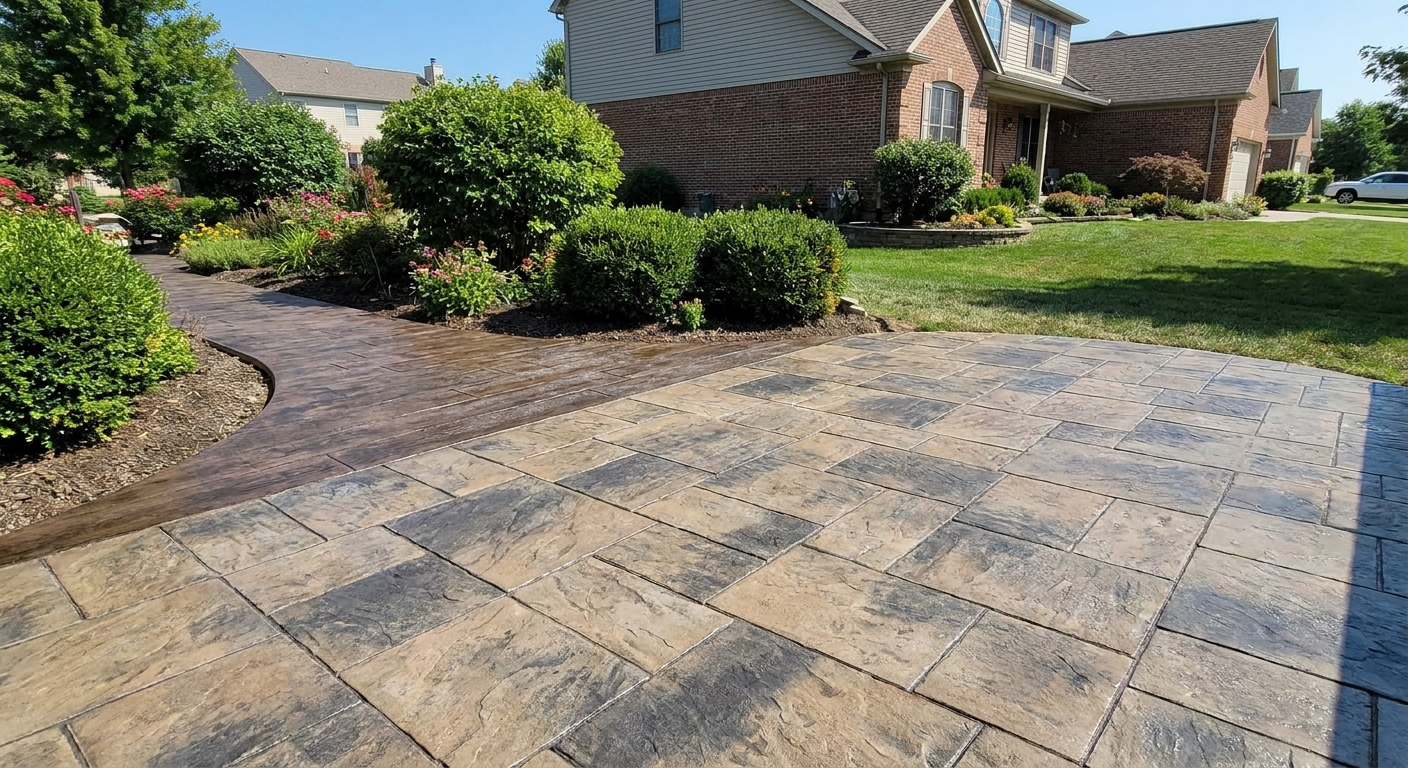
Popular Stamped Concrete Designs in Waterford
September 15, 2026
-
Can Retaining Walls in Waterford Prevent Yard Erosion?
September 1, 2026
-
Common Patio Layout Mistakes in Waterford
August 18, 2026
-
Is Your Driveway in Waterford Draining the Wrong Way?
August 4, 2026