Are Paver Driveways a Good Choice for Eastern Connecticut Homes?
Eastern Connecticut homeowners face a specific challenge. Winter freeze-thaw cycles wreak havoc on traditional surfaces. Summers bring heat expansion. Spring delivers torrential rain. And every driveway material responds differently to that seasonal beating. Pavers aren't immune to the conditions — but they're built to flex with them, not fight them.
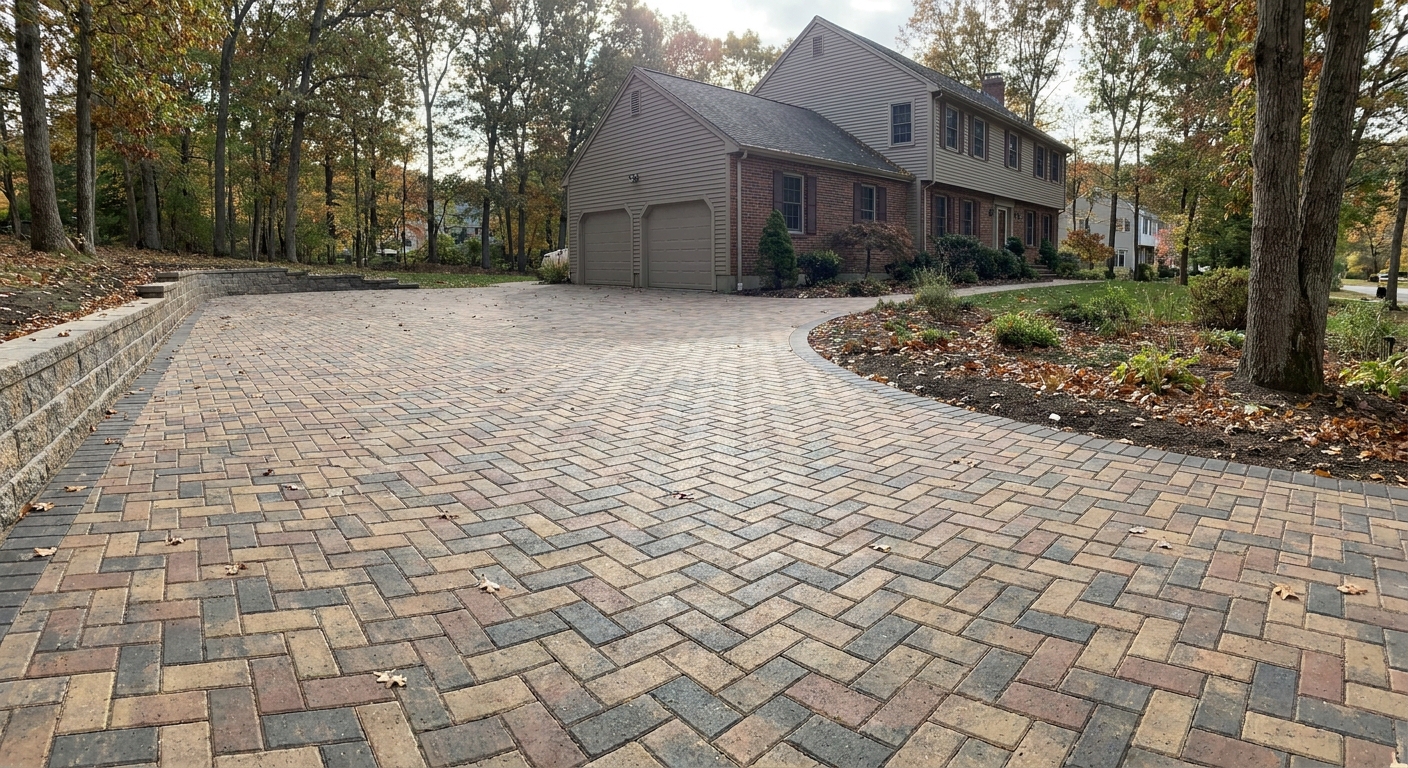
Most people think driveways are just about parking space. Square footage and slope. But the right surface affects drainage, maintenance costs, resale value, and how often you're calling a contractor. If you're weighing pavers against asphalt or poured concrete, the choice isn't just aesthetic. It's strategic. And in this climate, strategy matters more than curb appeal alone.
Pavers Handle What Concrete Can't
Poured concrete looks clean when it's fresh. Six months later, after a brutal winter? Hairline cracks turn into valleys. Water seeps in, freezes, expands, and the surface buckles. It's not a question of if — it's when. Asphalt fares slightly better but still softens in summer heat and requires frequent patching.
Pavers operate on a different principle. Each unit sits independently on a compacted base with sand joints between them. When the ground shifts or freezes, those joints absorb the movement. No single crack spreads across the entire surface. The driveway flexes without failing. We've seen paver installations last decades in this region with minimal intervention, while concrete driveways need resurfacing every seven to ten years.
Visual Flexibility Without the Cookie-Cutter Look
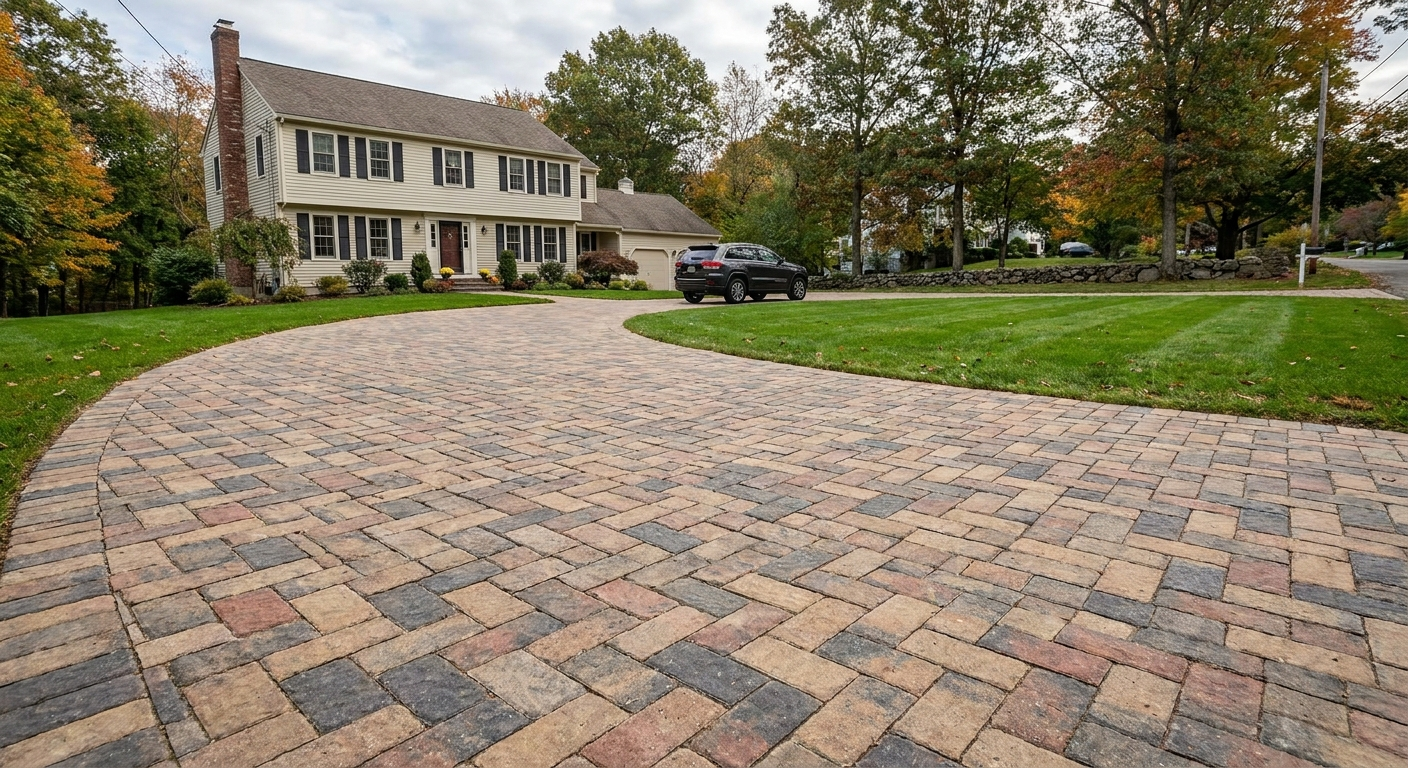
Walk through most neighborhoods and you'll spot the same gray slabs and black asphalt ribbons. Pavers break that monotony without crossing into tacky territory. You control the pattern, color, and texture. Herringbone brick for a colonial revival. Charcoal rectangles for modern builds. Tumbled stone for something rustic.
That level of customization isn't just about taste. It's about fitting the material to the home's architecture and the surrounding landscape. A well-designed paver driveway feels intentional, not slapped down by the lowest bidder. And when resale time comes, buyers notice. They may not articulate why the front approach feels elevated — but they respond to it.
Drainage That Works With the Weather
Eastern Connecticut gets hammered with rain in spring and snowmelt in late winter. Standard driveways channel that water straight into the street or your foundation. Pavers offer permeable joints that let moisture filter through the surface and into the base layer below. Less runoff. Less pooling. Less erosion chewing away at your landscaping.
If your property sits on a slope or near wetlands, that drainage advantage becomes critical. Stormwater regulations are tightening, and municipalities are pushing for more sustainable surfaces. Pavers check that box while still performing like a traditional driveway. You're not sacrificing function for compliance — you're getting both.
When Repairs Come Up, They're Surgical
Damage happens. Tree roots lift sections. Delivery trucks crack edges. Oil stains settle in. With asphalt or concrete, you're looking at cutting out a chunk and patching it — and the repair never blends seamlessly. The color's off. The texture's different. It screams "fix job."
Pavers let you pull the damaged units and drop in replacements. No jackhammering. No waiting for curing. The repair is invisible if it's done right. That modularity extends to routine maintenance too. If you want to add lighting, irrigation, or underground utilities later, you can lift pavers, do the work, and reset them. Try that with a concrete slab.
Cost Realities You Can't Ignore
Pavers aren't cheap. Installation costs run higher than asphalt and typically outpace basic concrete too. You're paying for materials, skilled labor, and a multi-layer base that needs proper compaction. If you're shopping on price alone, pavers lose every time.
But upfront cost isn't the full picture. Factor in longevity, reduced repair frequency, and resale impact, and the gap narrows. Asphalt driveways need seal coating every few years and full replacement within fifteen. Concrete cracks and settles. Pavers, when installed correctly, can outlast both with nothing more than occasional joint sand replenishment and a light cleaning. The math shifts when you look past year one.
Maintenance Isn't Hard, But It's Not Optional
Pavers don't require obsessive care, but they do need attention. Weeds will sprout in the joints if you skip maintenance. Polymeric sand helps, but it's not a permanent barrier. Plan on sweeping and spot-treating a few times a year.
Shifting can also happen if the base wasn't prepped right. Eastern Connecticut soil varies — some areas are rocky, others are clay-heavy. A contractor who skips proper excavation and compaction is setting you up for uneven settling within a few seasons. Ask about base depth and material specs before signing anything.
Here's what regular upkeep should include:
- Sweeping debris to prevent staining and organic buildup
- Reapplying joint sand where it's washed out or eroded
- Sealing pavers every few years to protect against stains and freeze-thaw damage
- Pulling weeds or treating joints with a targeted herbicide
- Checking for shifting or settling after heavy rain or snow
Installation Quality Decides Everything
A paver driveway is only as good as the foundation beneath it. If the contractor rushes the base prep or skips proper grading, you'll see problems within the first year. The surface should sit on at least six to eight inches of compacted gravel, topped with a sand bed that's level and screeded smooth.
Edge restraints are non-negotiable. Without them, pavers creep outward over time, especially along curves and borders. We've seen driveways collapse at the edges because the installer skipped plastic or aluminum edging to save a few bucks. Don't let that be your driveway.
Here's what separates a solid install from a future headache:
- Excavation depth that accounts for freeze lines and drainage
- Compacted gravel base using a plate compactor, not just a hand tamp
- Proper slope away from structures to prevent water backup
- Edge restraints installed before pavers go down
- Polymeric sand swept into joints and activated with water
Climate Compatibility Is Built Into the Design
Eastern Connecticut winters test every surface. Freeze-thaw cycles expand and contract materials. Salt accelerates deterioration. Plows scrape and gouge. Pavers handle all of it better than most alternatives because the system is designed to move.
Concrete fights expansion. Asphalt softens and hardens with temperature swings. Pavers shift slightly in their sand bed and then settle back. That flexibility prevents the catastrophic cracking you see on older concrete driveways. And if you choose pavers rated for vehicular traffic, they'll hold up under plow blades and heavy trucks without chipping.
Cold-weather performance isn't the only factor. Pavers also resist UV degradation better than asphalt, which fades and brittles under summer sun. You're not trading winter durability for summer weakness — you're getting year-round stability.
Where Pavers Fall Short
Pavers aren't perfect. If you're on a tight timeline, installation takes longer than pouring asphalt. Weather delays are more disruptive since the process involves multiple steps that can't happen in rain or extreme cold.
Snow removal is slightly trickier too. Plow operators sometimes catch the edge of a paver and pop it loose, especially if the installation wasn't done with restraints. You'll want to communicate with your plow service or invest in a snowblower that won't snag on joints.
And if your property has heavy shade or sits in a damp area, expect more moss and algae growth. Pavers are porous enough to hold moisture longer than a sealed concrete surface. A pressure washer handles it, but it's an extra step you wouldn't face with asphalt.
Resale Value Gets a Quiet Boost
Buyers won't list "paver driveway" as their top reason for choosing your home. But they'll notice the finished look. They'll see a well-maintained surface that doesn't have the patched, weathered appearance of aging concrete. And they'll factor that into their offer, even if it's subconscious.
Real estate agents in the region confirm it. Homes with high-quality hardscaping — including paver driveways — tend to move faster and command slightly higher prices. It's not a game-changer on its own, but it's part of a package that signals care and quality.
Who Should Skip Pavers
If budget is the only concern and you need a functional surface immediately, asphalt makes more sense. It's faster, cheaper, and gets the job done. Pavers are a long-term investment, and if you're planning to sell within a few years, you won't recoup the premium.
Here's when pavers aren't the right call:
- Tight budget with no flexibility for higher upfront costs
- Short-term ownership where resale payoff won't materialize
- Properties with unstable soil that requires extensive remediation
- Homeowners unwilling to perform periodic maintenance
- Areas with heavy shade and moisture where moss will be constant
Contractor Selection Makes or Breaks the Project
Not every landscaper or paving crew knows how to install pavers correctly. You need someone with a track record in this climate, who understands soil conditions and drainage requirements specific to Eastern Connecticut. Ask for references. Look at completed projects. Check how those driveways held up after a few winters.
Get multiple quotes, but don't default to the lowest bid. Cheap installation almost always means shortcuts. A crew that rushes base prep or uses substandard materials will leave you with a driveway that shifts, sinks, or sprouts weeds within two years. Pay for expertise. It's cheaper than ripping out a failed installation.
Here's what to verify before hiring:
- Experience with paver installations, not just general paving
- Portfolio of completed driveways in similar climates
- References you can contact and visit in person
- Detailed specs for base depth, materials, and edge restraints
- Clear warranty terms covering both materials and workmanship
The Smart Move for Homeowners Who Plan Ahead
Pavers aren't for everyone. But for Eastern Connecticut homeowners who value durability, design flexibility, and long-term performance, they're one of the strongest choices available. The upfront cost stings. The installation takes longer. But the payoff shows up in lower maintenance, better drainage, and a driveway that still looks sharp fifteen years down the line.
If you're willing to invest in quality materials and skilled installation, pavers deliver. Just don't treat them like a set-it-and-forget-it surface. They need care. They need the right contractor. And they need a homeowner who understands that the best driveway isn't the cheapest one — it's the one that performs when the weather turns and still looks intentional when the neighbors drive by.
Ready to Upgrade Your Driveway?
Let's make your home's first impression count with a driveway that stands up to Connecticut's toughest weather and adds lasting value. If you're considering pavers and want expert advice tailored to your property, we're here to help every step of the way. Call us at 860-574-0238 or get a free estimate and let's start planning your next project together.
‹ Back
Recent Posts
-
Are Paver Driveways a Good Choice for Eastern Connecticut Homes?
November 10, 2026
-
When Is It Time to Replace Your Patio in Central Connecticut?
October 27, 2026
-
How Tree Roots Damage Hardscapes in Waterford
October 13, 2026
-
Safer Winter Walkway Ideas in Waterford
September 29, 2026
-
Popular Stamped Concrete Designs in Waterford
September 15, 2026